
.png)
Episode 157 - Thad Miller, DDSmatch: Why Practice Transitions Succeed When Dentists Plan Early and Focus Beyond Price
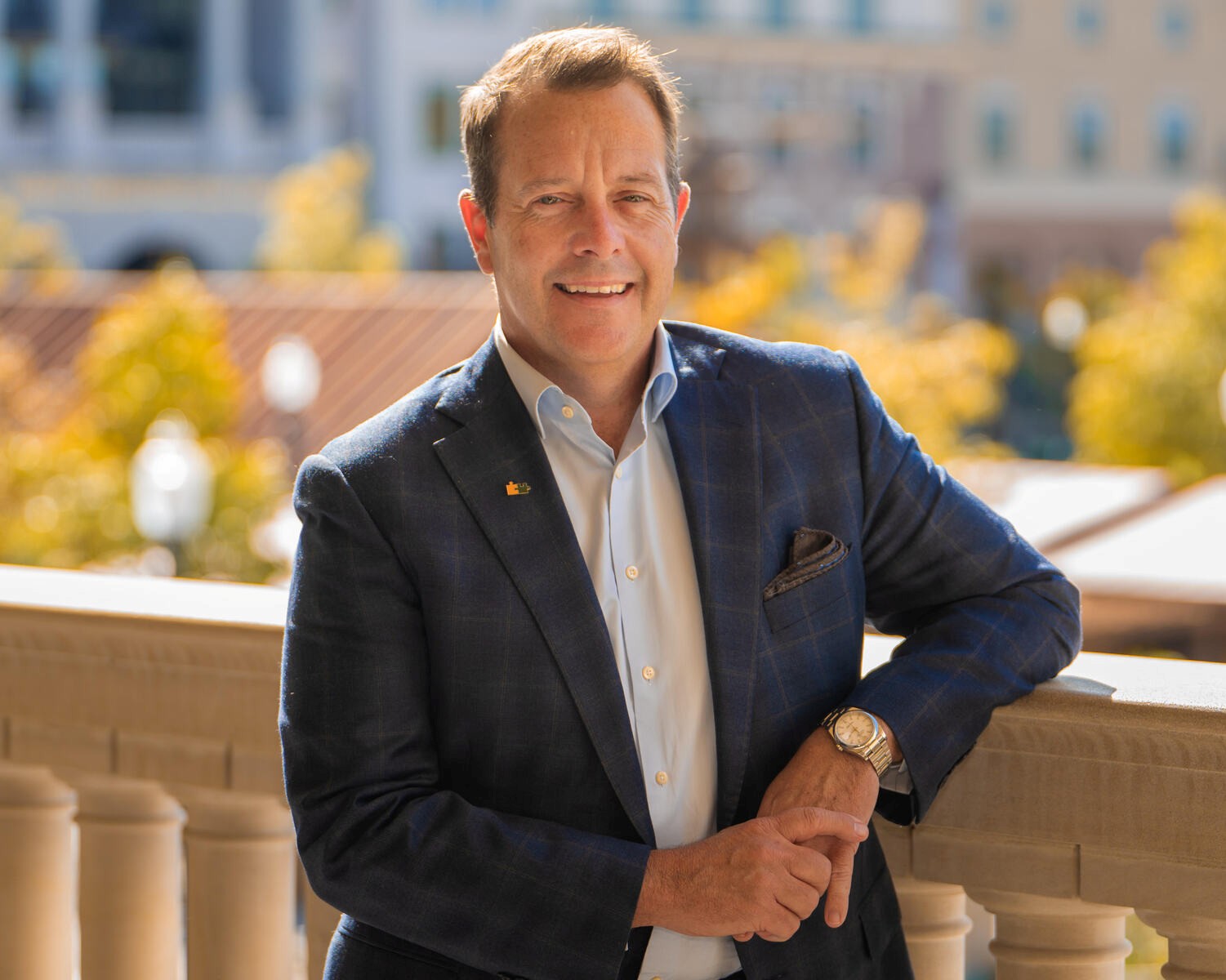
This week, the Dental Amigos welcome Thad Miller, Founder, CEO, and Dental Transition Advisor of DDSmatch. Thad is a nationally recognized dental industry leader with more than 30 years of experience helping dentists navigate practice ownership transitions. Through DDSmatch, he has helped facilitate over $1 billion in practice sales while building one of the largest dental transition networks in the country.
In this episode, Thad shares his journey from dental industry veteran to founder of DDSmatch. He discusses why successful practice transitions require much more than finding a buyer. Thad explores the importance of early planning, understanding all available transition options, evaluating DSO and private buyer opportunities, maintaining clean financial records, building trust throughout the process, and creating a legacy-focused transition to benefit sellers, buyers, teams, and patients alike.
To learn more about Thad Miller and DDSmatch, visit http://www.ddsmatch.com or listen to his podcast, MATCHplay, on all streaming platforms.
Listeners who want to reach Paul can do so at Paul@DentalNachos.com and those who want to reach Rob can do so at Rob@RMontgomery-law.com.
FULL EPISODE TRANSCRIPT
Bumper
Welcome to the Dental Amigos podcast with Dr Paul Goodman and attorney Rob Montgomery, taking you behind the scenes of the dental business world, all the things you didn't learn in dental school, but wish you had Rob is not a dentist, and Paul is not a lawyer, but since Rob is a lawyer, we need to tell you that this podcast is for informational purposes only and shouldn't be considered legal advice. Listening to this podcast does not and will not create an attorney client relationship, as is always the case. You should formally consult with legal counsel before proceeding with any legal matter. Learn more about the Dental Amigos at www.thedentalamigos.com. And now here are the Dental Amigos.
Rob Montgomery
Hello, everyone. I'm Rob Montgomery. Welcome to another episode of the Dental Amigos Podcast, where I'm joined, as always, by the Head Nacho himself, Dr. Paul Goodman.
Paul Goodman
Great to be talking, Rob.
Rob Montgomery
It's good to be talking to you, Paul, too. The only podcast that I know of that is hosted by a dentist and a lawyer. Very special. And if we're not the only, then we were definitely the first. Yes, you know, there are a lot more podcasts than there used to be back in the old days when we were pioneers, right?
Paul Goodman
Yes, exactly.
Rob Montgomery
We're hanging tough, though, Paul, and it's always a pleasure to be in the room with you. And today we've got a great guest, Thad Miller, who is the founder of DDS Match, which is a great sell-side broker firm around the country. We, in our firm, do a lot of work with our brokers, sometimes when we're representing buyers, sometimes when we're representing sellers, and I've always been really impressed with the people there and really enjoy working on deals with them.
And a little bit about Thad. He's a dental industry leader with more than 30 years of experience in the dental world. His circles of influence span across the United States and include practicing dentists, dental schools, manufacturers, suppliers, and beyond.
Over the years, Thad saw firsthand the challenges that dentists faced when it came time to buy or sell a practice or find the right partner. So, he asked the simple question: Could there be a better way? And what if the process could be professional, streamlined, and efficient while still maintaining a human touch?
Those questions led him to found DDS Match in 2009. Today, DDS Match is active in all 50 states with more than 65 DDS Match professionals and has facilitated over $1 billion in practice sales since its inception. The Trusted Transition Process is a proven step-by-step approach that allows dentists to transition on their own terms and has been the foundation of these successful outcomes.
In addition to his national role, Thad personally represents sellers in Indiana and the Louisville market and is currently working with more than 20 dental practices for sale. Thad is an active board member and vice president of the Dental Lifeline Network and a past board member of the Indiana Golf Foundation and First Tee of Indiana. He graduated from Indiana University with a degree in communications, is a licensed business broker, licensed managing broker in real estate, and a member of the International Business Brokers Association.
Also, Thad, like us, is a podcaster, or he hosts the podcast Match Play, where I listen to it. I've got a few episodes queued up. I'm following it, so I'm getting notices when they come out. So, there are a few that, in particular, I want to check out.
And in that podcast, Thad interviews business owners who have sold their businesses. So, not just dentists or veterinarians, who are a big part of Thad's world, but other humans in the non-healthcare space. And I've seen and heard great things about it.
So, really excited to have Thad back on the show. Thad was last on the Dental Amigos Podcast back in the scary COVID days, right in the spring of 2020, when we were trying to figure out where the dental world was going. And so, happy to have him back during normal, insane times, if that's what we live in these days.
And so, without further ado, here's Thad Miller. Welcome, Amigo, and thanks for being on the show.
Thad Miller
Do I say hola here when you say amigo? Yes, it's great to be here, guys. Thanks for having me back on.
Rob Montgomery
Yeah, absolutely.
Paul Goodman
Thad, I appreciate getting to know you over the past few years. You guys have been great supporters and sponsors of Nachos. Love all the brokers.
Our hard-hitting question to start is, you know, I've had the pleasure of being to where you live and host your event. It's a great event. If I went out there, Rob and I went out there, and you're going to Indianapolis. Indianapolis, yeah, Indianapolis. That was great. I loved the Crooked Stick times we've had out there.
Where would you take us for nachos, and what is your favorite topping?
Thad Miller
Social Cantina is where I would recommend. It's a great spot. There's this old railroad train line that got turned into a walking path, and now there are all these restaurants and fun things to do alongside it. And my favorite topping is, I'm a guac guy. You gotta go.
Paul Goodman
It's classic.
Rob Montgomery
I like that.
Paul Goodman
I like it.
Rob Montgomery
That might be one of my favorites.
Paul Goodman
Yeah, it's user-friendly.
Rob Montgomery
Got it. Yeah, I'll put that on the list. I'm going to be in Indianapolis this fall. So, Paul, we will have to mark it there.
Paul Goodman
Social Cantina.
Thad Miller
Paul, I will say, being a nacho specialist, I did see where they have guacamole in, like, a tube, you know. That would be, you know, kind of like I saw where, like, in a toothpaste tube.
Paul Goodman
Wow, that delivery makes me sick.
Rob Montgomery
It's not right, right? Something's not right here. Yeah.
Thad Miller
I mean, it's convenient. You could put it on individual nachos, true, kind of.
Paul Goodman
You know that you said that because I was just... my daughter wanted guac the other night, and I picked some up. And yes, the distribution per individual nacho. At first, I was with you in thinking that was kind of gross, but now I'm like, you could just put it on per chip. So now, now I got to find it, I guess.
Rob Montgomery
But she's in a canister with that, where that... yeah, that never took off.
So, Thad, I just want to, at the outset, you know, like I said, we do a lot with DDS Match brokers around the country, and I've had the pleasure of spending time with your folks. You know, obviously, Joe McGonigal in the Philadelphia area, Kevin McGonigal, Bill Coats, and your guys in California I spent some time with this fall, and Sean Sullivan, Jason Owens, Roy Forouf.
And one of the things that I am really always impressed by, and it really comes back to the business model that you have, is how you've taken these guys and women who are really experienced in the dental world, that have done lots of deals and worked with dentists in the supply and equipment world for literally decades, and taken them to really leverage their experience in a higher way.
And so, I look to the book by Arthur Brooks, From Strength to Strength, where he talks about happiness as you're older really lying in your ability to be doing that which you are really good at and where you offer the most.
And when I see your brokers, I see guys who really spent their time and paid their dues, worked hard in the dental industry, that now have that experience that they're able to bring. And so, they're able to jump off that curve of grinding it out, which we're all able to do when we're young, and get to this sort of mentor, consulting, sage kind of point in their life, where now they're able to take that experience and convert it into something that's even more valuable and impactful in helping people transition their practice, which is just a seminal transaction for any business owner, as we all know.
But I just love working with your folks because of that. And I get excited about the business model you have, and I feel like it makes so much sense and just brings so much value to your clients. And truly, your folks are not, quote-unquote, order takers, which, you know, there are people in the broker world that are good, and there are people that really don't do much.
Your folks, across the board, really provide value. And a lot of that comes from, obviously, the background and the people that you seek out and recruit for these positions.
So, I really have to commend you. I find it to be really inspiring, how you've built this and the people that you've built it with. So, kudos to you. You know, you've built a great...
Thad Miller
I appreciate that. Yeah, I really do. And I think maybe one of our secret sauces is empathy because everyone that's with DDS Match was in the role of a buyer, where they were in a successful, well-paying position, knew they were going to get a check every other week, and then they left that to own their own business.
That's what, you know, when we're talking to young buyers, that's what we're asking them to do. We can empathize with that because every one of my team, DDS Match Professionals, has done that. They own a franchise of DDS Match that I started.
And we can also empathize with the seller because we own a business, and we make investments in the business. We, at one point, will sell that business. And if we can empathize with both sides, it's really about understanding and trust that makes these successful transitions happen.
Rob Montgomery
Yeah, and that shows. And I think you've built the culture and the team that so many like-minded people have adopted that. And, you know, it's really obvious when you're working with any of them. Thanks.
Thad Miller
Thanks. No, I'm very proud of her.
Paul Goodman
And I'll chime in as the only dentist here who's also been a broker, and now I like to use an area sports fan analogy. I've liked to move to the analyst box and just refer all the deals to you guys because I've seen all sides of it.
And I think what dentists, our listeners, might not understand is we're used to taking state boards, passing tests, having to check boxes, and as a buyer, I've been a buyer, the broker world can be wild, from dual representation to misrepresentation to being misled.
So, when you're a dentist working with brokers, it's a bit Wild West-like. So, until I met the DDS Match Group, who are just very responsible in how you treat other people, it's quite nice because I've been mistreated as a buyer multiple times.
Yeah, some I will admit that I should have been able to figure out. You know, I might not have had the resources. There were no Facebook groups back then or podcasts. But other times, I was just totally misled or had misrepresentations made toward me in trying to buy practices.
So, just to kind of put that context for the people listening who are thinking of buying practices and working with brokers, it's not easy out there as a dentist looking to buy a practice. And then, of course, on the other side of that fence, sellers, it can be confusing and chaotic.
And the fact that you guys really, I mean, Rob mentioned it in the intro, the Trusted Transition Process. Dentists love systems, and I think that's one of your best things because you have an actual system, like we do for preparing a crown. I think you used that example in one of your talks, or bonding a tooth, that really makes sense to dentists.
Thad Miller
Yeah, well, and I think, you know, when I started the business, I went to a coach, a gentleman by the name of Dan Sullivan. He's an author, a coach. His group's called Strategic Coach, and they really taught me how to build a process.
And that's really where the Trusted Transition Process came from because I did this by myself for six years before we started the franchise. I mean, I had a relationship with the company that does the business valuations that we still use, and we do 500 business valuations a year with Blue & Co.
I had marketing people that I worked with, but I did it on my own. So, I got my hands dirty individually before we grew like we have.
But I think the critical thing is, you're right, it takes a process, and it takes listening to your clients to figure out what they need.
Paul Goodman
Totally.
Rob Montgomery
Yeah, and I think, you know, what I said, like, I really think that the right broker provides value to the deal.
So, I mean, it's not infrequently that I have conversations with clients that say, like, "Do I really need a broker?" You know, and I'm worried that I'm going to pay the broker 8% or 10% or whatever, and I don't think that they're going to justify that fee.
And I think it's important to differentiate that when you get into the broker world, the consultant world, frankly, the legal world too, unlike dentistry, where there's this sort of fixed-set deliverable, you have to deliver a product of a certain quality in a certain way.
There are some people who do it better than others, for sure, but you're not getting creative with a crown. Yeah. And it's not like you can make a crown look different. You know, some certain dentists have different-looking crowns.
But when you get into the consulting world, whether, again, it's a broker or a lawyer, there are so many different ways to approach something that you can't really compare apples to apples.
And I think that a lot of people really focus on, like, wow, what is that going to cost me to sell my practice with a broker? And I think that's not really the right way to look at it.
I think you need to find a broker who's going to add value to your deal because if you don't, frankly, if you want to look at it from just the dollar standpoint, if they can't bring you more than 10% of value, then they're not really doing their job.
So, it's not about finding somebody that'll do it for 5% or 7%. It's about finding somebody who's going to bring value that's going to get a multiple of that.
So, it's not really, should I pay somebody or should I not? It's, can I find somebody who will add value to my deal? And that's the important thing.
And a good broker and a good sell-side consultant, like the folks that work with Thad's company, are prime examples of that. They add value. They're not order takers.
Paul Goodman
One hundred percent.
Thad Miller
Well, and one of the things that I want to stress is, obviously, we work for the seller. We don't represent both sides. We never have.
It's about options. I mean, if you're a seller, you don't have to know where you're going to go when you start. It's definitely a journey.
But I feel like our job is to give options so then they can transition on their terms. It's their decision. They have control.
Every deal, every buyer is different. Every potential transition is different. And we're there to present all the options so they can pick what's right.
It may not be the best. It may not be the highest price. It may be the right fit.
And that's really what we're shooting for, is trying to get all of those boxes checked. But it's really about bringing options.
And, you know, we have 25,000 interested buyers on our website looking for opportunities, and we have 200,000 people visit our website a month. So, that's part of our value add to somebody considering hiring us because these buyers aren't always necessarily in our backyard.
If you have a local broker and they may know the market really well, that's great. But why not have a local broker with also a global reach? And that's what we have.
Paul Goodman
I want to explain for a second that, just for our listeners, it's humorous to me, and I'm a dentist who now works with dentists. And, you know, I do the... I know you place associates like I do.
And it's very funny to me, but poignant. Some people will call up my team and say, "We might sign up for your Job Connect program, but my brother's cousin's sister is graduating from dental school, and she might want to work for me. So, if she doesn't want to work for me, I'll call you then."
And I train my team to say, "It's awesome your brother's cousin's sister's friend might graduate from dental school, but don't you want the most options for the most important position in your practice?"
The associate dentist is the most important position in the practice because without the associate dentist, the practice can't open that day, right? Doesn't mean that the office manager is not important.
And, Rob, this is not just for an associate dentist, right? Right now, take that and put this into your practice sales process.
Don't you want the most options for someone who's taking over your legacy, hiring your team, and seeing the patients that you've seen for decades?
There's no bigger relationship-based field than dentistry, for better or for worse. The relationships are quite high that we have.
And like you said, with options, don't you want to compare and contrast some options? And you can't do that without a good broker. It's impossible.
Rob Montgomery
Yeah, yeah. Well, I think it goes beyond just options. I think it's options and education, understanding your options too, you know?
And a lot of times, we'll have conversations with people who say, "I don't know what to do. I don't know if I should sell to a DSO or if I should sell to a dentist or I should sell to my associate."
It's like, whoa, hold on for a second. Very few people are in that position to have those three options.
The reason why you're beating yourself up trying to figure out what to do is because you're not getting any advice as to what truly your options are, what you can do, and what that looks like.
You know, if you have a practice that grosses $800,000, you're probably not selling to a DSO.
Paul Goodman
That's why I'll ask you that. I'll just lay this out. I used to do this, and I would get a call, and listen, one of my phrases was, "There's no small practices, just small practice brokers."
There are small practices that help people transition and live their dream, and people want those. There's medium, and there's large.
But someone called me once and said, "I have a three-operatory practice. We collect $400,000 a year. Whatever you do, don't try to sell me to a DSO."
And I go, "It's not going to be a problem. I promise you, I won't try to sell you to a DSO."
So, for you, Thad, to give our listeners some context, since you're on the ground with this daily, what's the latest deal with DSOs?
When is that an option?
Kind of give us an update on your view of how DSOs are impacting this space and something our listeners could learn from.
Thad Miller
Well, I mean, I think you've got to look inside yourself as a seller and ask yourself what you want.
And, obviously, there are positives and negatives to both DSOs and individual buyers.
It's important to really talk to an advisor to figure out what your options are, but theoretically, there are practices out there that could do either.
And it's the questions that matter.
I always say, if you're asking the right questions, you're closer than you think.
But a lot of times, our clients, before they're clients, they're just asking themselves these questions, and they're not really asking somebody who's in the mix, talking to people all the time.
Because there might be a great group buyer for their practice. There might be a great individual.
And honestly, until you start meeting with people, individuals, groups, or DSOs, you don't even know. You're operating out of experience that you don't have.
So, that's my thing. Hire somebody that can get you in front of all of them, and then bring in your trusted advisors, bring in your spouse, and you'll figure it out.
The answer's in the room. You just have to get in the room.
Paul Goodman
When does the either-or come into play from a stats perspective? Is it number of operatories? Is it total collections?
If someone's thinking, "Am I in that either-or category where I could do either a private practice or DSO sale?" where do those metrics start for you, in your experience?
Thad Miller
I'd say it's close to the million-dollar collections revenue range, sometimes less.
Again, it depends.
Sometimes you could be even smaller, and there's a group. Maybe it's a dentist who has four or five practices in an area, and they want another practice.
But again, there's been too much stereotyping in this world of "You're a DSO candidate" or "You're an individual candidate."
You don't know.
I've sold $3 million revenue practices to an individual buyer.
And that individual buyer was a very high-producing associate for a DSO, and he wanted to work five days a week, and he showed he could drive a $3 million business.
So that business, which typically would be set up as a potential DSO-only sale, we found a great buyer, and the seller wanted to sell to this person over anybody else or any other group, and it worked out great.
Paul Goodman
In that scenario, Thad, what I... you know, it kind of fits with other points we're going to talk about, but did that seller—and I'm actually curious—were they also motivated to sell to a private practice dentist because they wanted to be finished practicing and not stay for five years?
To me, I feel that's what I hear people talk about.
Thad Miller
Yeah, that's a part of it.
I mean, if somebody is thinking, "Okay, if I'm going to consider selling to a group or selling to a DSO," yeah, you've got to plan ahead.
I mean, five to seven years.
Start talking to people.
And again, talking doesn't mean it's sold. Talking is the first step toward even just considering it.
I talk to probably 10 dentists a month that aren't contracted with me, that just have my cell phone and touch base with me on things going on with their practice.
I'm free advice to people in my market on when it's best to start, when it's best to consider, and things they need to consider before they even start the process.
Rob Montgomery
Right.
Yeah, I want to talk about that.
And just to wrap up before we move on, because this is a great topic.
I think a lot of times people just talk about DSOs like it's this monolithic thing.
The national DSO that owns 300 practices is not the same thing as the doctor-led DSO that owns three.
You might call both of them DSOs, but they are completely different animals, different business models, different deal structures, different risk.
So, the easy answer a lot of times, I find, is: it depends.
And I think people, sometimes for worse or sometimes for better, just lump them all together and think, "Well, my friend did a deal with a DSO, and it didn't go well, so all DSO deals are bad."
It's like, who was the DSO? When did they do it? What was the structure of the deal? Who was involved?
There are so many variables that just saying "DSO deal" tells you really nothing in that context.
But I think when you talk about early planning, that's really crucial.
I want to talk about that because I know Joe McGonigal. I've had the pleasure of being in the room with Joe probably too many times when he's lecturing on this.
I might be able to give Joe's lecture at this point.
But he's got a great slide where he talks about getting rid of the knots.
If you give him enough time, it's a ball of knots if you're going to try to do it immediately. It's fewer knots and wrinkles if you're going to do it in a couple of years.
And if you want to plan five years plus in advance, we can kind of work out all the issues, all the kinks, and really set you up for a successful transition if you start early.
But for the people that get to the point where they call up and they say, "Thad, I'm cooked. I need to sell my practice immediately," you're limited as to what you can do to change things then, right?
Thad Miller
Absolutely.
And that's with any business.
Even talking to other business people on this podcast I just started last summer, it's all about starting early and starting the conversation.
And don't be afraid to sit down with someone, even if you know you're a few years away, because there are little critical things that you can do to make sure that you get the most for what you've built.
Paul Goodman
Right.
I'll also add in with that person, Rob.
Technically, I'm a small group, and we've acquired practices.
But if Joe McGonigal brought me a practice that did $750,000 a year and the owner didn't want to stay for at least a year, I would be like, "I have zero interest in buying this practice."
Because when someone comes and says, "I'm totally burnt out as a dentist," and I think I can say this as a dentist, it's not because they can't pick up the handpiece and prep a crown anymore.
It usually has to do with all their outside-the-operatory stress, and that's usually the team, and those are usually not good cultures, right?
So, when someone says, "I've had this business for 30 years. I can't take it anymore..."
Rob Montgomery
Yeah.
Paul Goodman
It's hard for someone to say, "Oh, I can't wait to jump into this fire," right? You know, sort of tipping their hand, yeah.
And then, you know, these aren't always pleasant stories. We acquired a practice of someone who had a shoulder injury. That's a pretty good reason, right? I mean, that was an unforeseen event, and he rehabbed and became our associate after a shoulder injury, a small one, right?
But at least in that story, it wasn't, "I have to be done practicing dentistry tomorrow."
So, I think what you shared, Thad, and Rob, what our listeners get is planning is important, whether you want to sell to a DSO or a group, because those can be interesting options for people, but they don't necessarily want you to throw them your hot-potato practice and run away.
Thad Miller
Yeah, no doubt.
And, you know, honestly, I have an associate that works for me that is meeting with a dentist right now who studies burnout.
And I'm like, well, you just might have to give a little bit more energy to get through the end of the pipe.
It's like The Shawshank Redemption, you know? You're almost there, but we gotta...
Paul Goodman
Get AI to make a meme on that. I don't know if you can, you know, with the copyright or that, but that's a good marketing one.
Thad Miller
Well, yeah, I mean, dentistry, just like any business, requires energy, and there's no cruise control if you have a successful business.
Even if you have an unsuccessful business, you've got to apply energy, and there's no cruise control.
If you take your foot off the accelerator, you're going to slow down.
And keeping that business stable—it doesn't have to grow 15% a year—but keeping it stable is one of the most critical things that a seller can do.
Rob Montgomery
But, I mean, that's critical, but that comes back to, like, you're talking about Strategic Coach and Dan Sullivan and the messages that he and others like him have.
It's really about building a good business that kind of insulates you from that, but it makes it easier to continue on so you don't get to this point where you are completely cooked.
And, you know, it's easy to say. I mean, I'm going to say it, and I'm going to listen to myself say it because there are a lot of days that I fail miserably at this.
I own a professional practice where I render legal services, and I also run a business.
And some days, I don't really do so well at striking that balance.
But it's really the ability to step back and build something that is a business. It's a challenge, but it has returns.
It has returns when it comes time to sell.
It's worth it.
And you can stay sane longer, you know?
You don't find yourself in this position where you have to sell.
You can wait out bad economic cycles or wait for the time of your choosing until the time that the wheels are falling off.
Because very few decisions in life are good when they're made when the wheels are falling off.
Paul Goodman
When someone calls you and says, "My office manager quit. I want to sell my practice now," right?
Because that's actually what I was asking next.
We were talking about what buyers look for.
And I had a... sadly, when my dad passed away, we had to sell the house, right? My childhood house.
And I remember this experience well.
It's very emotionally devastating, what happened with my dad, but the house had memories, and we needed to sell it.
And I remember this distinctly. This family bought it, and then they kind of made it seem like the house was falling apart.
I mean, I don't know anything about real estate, but I know you do, Rob.
And they wanted to get money off for this and that, and it was kind of annoying to me, right?
I was emotionally annoyed by the situation.
And it all worked out, right?
But I can only imagine that when you share things with sellers, like, "Hey, this buyer looked at your practice, and they don't want it," right?
They don't want your life's work.
What are some of these things they are looking for, for sellers to understand?
Because that can't be an easy conversation all the time.
Thad Miller
Yeah, I mean, I think the most important thing that a seller can do is make sure that their books, whoever they're working with, whether it's their accountant, if they have a bookkeeper, or whatever, are as clean as possible.
It makes all the difference in the world.
Transparency leads to trust, and trust leads to a successful transition.
Those key words: transparency, then trust, then a transition.
And I always encourage sellers, when we first start working with them, to enter their practice and think about their practice from a buyer's perspective.
And that can be difficult because dentists are very routine-driven. They're very process-driven, which is great. That's what we want for healthcare, right?
We don't want somebody trying something new every day on a crown prep.
You want consistency.
But that consistency in selling a business can be challenging.
The dentist walks in at 8:55 every morning through the back door, grabs a quick coffee, and then all of a sudden they're doing hygiene checks.
They don't even go to the front of their reception area to see that there are 10-year-old magazines and you've got crisis news on your monitor when people are waiting to go see the dentist in the back.
You know, they're talking about invading Venezuela.
You want to have a full, encompassing look at your practice when you're considering selling it from the buyer's perspective.
What are they going to see when they walk in there?
Not unlike selling your home.
Paul Goodman
Tell me this, then.
What are some signs of unclean books?
So, you said you've got to have clean books, and someone's listening and saying, "Sounds good."
What are some signs and symptoms that you see of unclean books?
Thad Miller
I mean, unexplainable expenses.
Expenses that are way out of range.
One of the things that we do, we work with Blue & Co., a third-party CPA firm that is a top-50 healthcare firm in the country.
Rob Montgomery
They're great.
Thad Miller
Yeah, they're just wonderful, and I've worked with them since the beginning.
And they will dive into the financials of the seller when we get started, and they'll isolate these questions, and we'll be able to answer them at that point.
I am not a valuation person. I've never done an appraisal on a dental practice.
A lot of brokers do their own appraisals.
You know, "$1 million? We're gonna try and sell it for $800."
Well, that's not an appraisal. That's a guess.
You could have two $2 million collection businesses, and they could be valued in two different ways based on what's going on inside the practice.
The revenue isn't the telltale.
You shouldn't price it from revenue.
You need to price it based on what's actually happening.
So, with us, we can isolate some of those things, get some questions answered, like, "Why is there a $23,000 expense here that we can't find?"
Well, we can get down the wire and find out, okay, that was a mistake, and they paid their accountant for their complex tax return during a difficult situation, and it was put into the practice.
You just never know.
But I think that transparency is such a critical piece.
So, if you're a seller thinking about selling, you've got to think about it from the buyer's perspective because that's the question they're going to be asking once you get into this.
Paul Goodman
It's key. It's the storytelling because someone's buying this for the next 30 years.
And sometimes I've seen sellers say, "I just write these things off for country club memberships and things like that," and it just becomes confusing.
And a confused buyer tunes out, right, no matter how much you explain it.
Rob Montgomery
Well, also, confusion causes delay, and delay kills deals.
I mean, time is a killer of all, right?
And if you spend months or even weeks trying to unravel questionable things, yeah, first off, you lose confidence, right? You don't trust it anymore.
But just time goes by, and that's bad.
And meanwhile, this buyer is looking around. They found some other practice, or another opportunity came up, or their loan approval expired.
All these things start to put stress on the deal.
And more so than anything, that is the number one deal killer.
Paul Goodman
What sellers don't realize, and I didn't realize this as a dentist until I did this, is it's not like a waiting list at a restaurant, where if the person doesn't want the table, they just text you and say you're up next, right?
When you put a lot of effort and time into one buyer, and then that doesn't go to the finish line, it's a whole process to get the next one going.
And I actually, to be honest, until I did this, I didn't understand that part.
I just thought, "Oh, if you have a good practice and Dr. A doesn't want it, well, it must just be the next day Dr. B wants it," right?
And that's why I try to explain to these sellers who have their brother's friend's cousin's sister wanting to buy their practice, why don't you get a few more people involved than just them?
So, I wanted to ask you that about culture, leadership, and systems.
And I'm a practice owner and have been a buyer.
This is the part where I feel for buyers, would have felt for myself.
Buyers want good culture, leadership, and systems, but how do they even begin to vet any of that during the due diligence phase?
Rob Montgomery
It's tough.
Thad Miller
Well, I mean, when you buy a practice, when a buyer is considering owning this practice and they're doing a meeting, there's this term called goodwill.
And that is really what they're buying.
They're buying this blessing of the seller to the buyer and the systems they have in place and the operation they created.
Because they're usually more successful if they buy somebody's practice because it's already creating cash. It already has a patient base versus starting from scratch.
Yeah, you can pick out the colors you want and all that, but the investment is usually fairly similar to buying a producing practice.
But you make money day one versus waiting until day 180, and that period of time can really cause a crunch.
But when they're sitting down and they're really getting to know this seller, I want them to ask any question they want.
And we work with our seller to make sure they're speaking about what they have.
And recently, I've been adding in another step to our process where, when I have a seller who really likes a buyer and they've met once or twice, they've met each other's spouses, I'm starting to institute this:
I want the seller and the buyer that they really like to go out to dinner. Take your spouses. Just go out to dinner. See if you like each other outside of the practice, outside of the questions like, "How many root canals did you do last month?" or "How many implants do you do in a year?"
Just get to know each other.
And if we do that, traditionally, the process of getting to closing goes so much better because we have that trust.
Trust builds confidence, at least in working through these issues.
Because, as you know, Rob, there are so many little issues and little nits and little things that come up between the first meeting and closing.
We've got to make sure that that goodwill passes on, that the seller knows the buyer.
So, when they write that letter that we help them with sometimes, or they're seeing somebody in the grocery store a week after closing, they can say, "Yeah, you're really going to like Dr. Jones. She's wonderful. And in addition to going to a great school, she has great experience, and she's got a great family, and she's going to live in this community, so you've got to give her a shot."
And I think that extra step, where this isn't so transactional that it's transitional, is such a difference.
Rob Montgomery
For sure.
I mean, it's the difference between selling a liquor store and transitioning a dental practice.
Thad Miller
They're a relationship business.
I mean, obviously, Paul, you just said that earlier.
Paul Goodman
Send them to Social Cantina. I like it.
Go to Social Cantina over some nachos, margaritas.
Yeah, nachos and margaritas, right?
See what you think after that.
Rob Montgomery
Yeah, right.
That's great stuff, Thad.
You know, it's been awesome chatting with you again.
And as we wrap up, I do have to give you kudos because when we last talked on the podcast, like I said, it was back in the crazy spring of 2020 COVID times.
And I was pretty much forecasting that this was the end of the seller's market in the dental transition world, and the world had tilted and shifted back, and now this was going to be a buyer's market.
And, you know, Thad, you came on the show and said the exact opposite.
You said it was still going to continue to be a seller's market.
I thought, "There's no way. There's no way that he's right with this."
Turns out, Thad, you were absolutely right.
And I will publicly admit that.
And I appreciate that.
And that's what comes from experience and knowing how to read the room in the industry.
And so, where are we six-plus years later?
It's exciting with what's still going on in the dental world and the opportunities for practice ownership.
Thad Miller
Yeah.
And the one thing I would leave to anybody that's working as an associate and is considering ownership:
There's risk in being an associate, so don't act like you're not taking any risk.
I mean, things can change really quickly because you have no control. You're an employee.
Things can change.
They can hire that second cousin, third removed, like, Paul, you were talking about, and replace you.
So, don't think there's not risk in being an associate.
It's just that when you're an owner, you get to benefit from the risk.
Rob Montgomery
Right.
And control the risk.
You know, let's say you control your destiny at that point, and that's different from being an employee.
It's an excellent point.
Great stuff, Thad.
If people want to learn more about DDS Match or get in touch with you or your team, if you could tell our listeners how they would do that.
Thad Miller
Sure.
I would just encourage them to go to the website, DDSMatch.com.
If you're a young dentist looking to own, create a free profile, and that allows you to search for opportunities across the country.
We've got 65 people that do this now in every state.
And if you create a profile, you list where you're most interested.
You could pick San Antonio, Texas; Charleston, South Carolina; and Indianapolis, Indiana.
And when opportunities arise in those individual markets, you'll be notified.
And that allows you to connect to our professionals.
We work with the seller, but we also know our market, and we can help get you connected to good advisors in your space that can help you during the process.
We want to make sure that this goes well, and we encourage you to ask good questions and build a team because that's what sellers want to see.
They want somebody that's prepared to take their legacy into the new generation and work with their staff that they care about and work with the patients they've taken care of all these years.
So, just DDSMatch.com.
Love to talk at any time.
I can be reached easily through that, or we can get you connected to your local advisor.
Rob Montgomery
And the podcast, Match Play, is available on all the usual podcast outlets too. So...
Thad Miller
Yeah, it's kind of fun.
I talk to humans that do all types of things.
I have a person who owned a translation business, a person who owned a software integration business. I just interviewed a farmer that sold his farm and his production plant.
So, the goal is just to understand that no matter if you want to own a business or you own a business, you're not alone, no matter what field you're in.
We all have concerns over how it's going to play out.
And listening to these stories—origin stories, how they grew, how they sold—even if it was a $300 million sale to IBM, they all go through the same process.
And I just think they're great stories.
Rob Montgomery
Yeah, it's cool.
Yeah, be sure to check it out.
Well, Thad, it's always a pleasure.
Thanks for taking the time and sharing all of your knowledge and experience with our listeners.
Thad Miller
Thanks, gentlemen.
I really appreciate you.
Paul Goodman
Thanks, Thad.
Rob Montgomery
I always feel like, Paul, you want to work with somebody that runs a good business.
When it comes time to sell your business, do exactly what you know.
And when you look at consultants, over the years, the ones that really provide the best service are the ones that run the best operation themselves.
And I think Thad has really done a good job in assembling the team around the country of DDS Match brokers.
Like I said, I really am impressed with the experience and the industry knowledge that these folks bring to the transition context.
Paul Goodman
I mean, don't be dentist-cheap.
I can say that as a dentist.
On your once-in-a-lifetime decisions, you're going to do this once, and it's way more than the price or the commission.
It's your timeline, it's the fit, it's how your team's going to be taken care of, and your patients.
So, just work with really good people on these really, really big decisions.
I would say it's the second biggest decision in your career, selling, and the first biggest is buying.
Rob Montgomery
Yeah, and I think to that point, working with these people, we've heard this enough from Thad and Joe McGonigal and others: you have to get in touch with these people early.
And the great thing is they'll help you right now.
There's no deal afoot—they're going to help you with your practice. They're going to help you get it ready for sale.
If you're worried about the cost and whether you're getting value, get on it early and get all the value possible.
If you're going to reduce this whole process to a quote-unquote mere transaction where you say, "Hey, send me the listing agreement, and I'm ready to go live as soon as possible," you're not going to get as much value.
I mean, look, you get some value, but it's not the same.
If you really avail yourself of what these guys are offering, they can really help set you up for success.
And that's where the value comes from.
Working with people that bring value, as opposed to order-takers in the space, is crucial.
Paul Goodman
Totally with you.
Rob Montgomery
Right.
Thank you, Paul.
Thanks for listening, everybody.
Bumper
Thanks for listening to another great podcast with the Dental Amigos. And don't forget to tune in next time to have the dental business demystified. If you're looking for more information about today's podcast, you can find it on the dental amigos.com if you're looking for Paul, you can find Paul at drpaulgoodman.com and if you're looking for Rob, you can find him at yourdentallawyer.com This podcast has been sponsored by Orange Line Media Group, helping dentists and other professionals create content people love. Find out how we can help you take your business to the next level at www.orangelinemg.com. Till next time.
.png)
.png)

.png)