
.png)
Episode 155 - Jason Tanoory, DMD: Leadership, Associate Retention, and Building Scalable Dental Teams
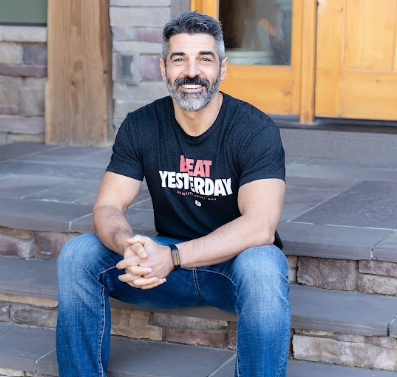
This week, the Dental Amigos welcomeJason Tanoory, D.M.D., dentist, founder, speaker, coach, and host of The Dental Lighthouse Podcast. Dr. Tanoory is a nationally recognized dental leader focused on practice growth, leadership development, clinical mentorship, and helping dentists build scalable, people-centered organizations.
In this episode, Dr. Tanoory shares his journey from private practice owner to coach and mentor for growing dental organizations. He discusses associate recruitment and retention, leadership development, mentorship models for young dentists, personality and culture assessments, burnout prevention, and how dentists can build systems and leaders that allow practices to grow beyond dependence on the owner-doctor.
To learn more about Dr. Jason Tanoory and his podcast, visit The Dental Lighthouse or email him at jason@thedentallighthouse.com.
Listeners who want to reach Paul can do so at Paul@DentalNachos.com, and those who want to reach Rob can do so at Rob@RMontgomery-law.com.
FULL EPISODE TRANSCRIPT
Bumper
Welcome to the Dental Amigos podcast with Dr Paul Goodman and attorney Rob Montgomery, taking you behind the scenes of the dental business world, all the things you didn't learn in dental school, but wish you had Rob is not a dentist, and Paul is not a lawyer, but since Rob is a lawyer, we need to tell you that this podcast is for informational purposes only and shouldn't be considered legal advice. Listening to this podcast does not and will not create an attorney client relationship, as is always the case. You should formally consult with legal counsel before proceeding with any legal matter. Learn more about the Dental Amigos at www.thedentalamigos.com. And now here are the Dental Amigos.
Rob Montgomery
Hello everyone, and welcome to another episode of the Dental Amigos Podcast. I'm Rob Montgomery, and I'm joined, as always, by the head Nacho himself, Dr. Paul Goodman.
Paul Goodman
Great to be talking, Rob.
Rob Montgomery
It's great talking to you, Paul. And we've got a great guest today, somebody that I had the pleasure of meeting. You've met before, though, at your recent Super Dentist Boost. Yeah, okay, I'm sure we will.
Paul Goodman
We predate Facebook, so—
Rob Montgomery
Wow, that's like a real friendship. And it's Jason Tanoory, who's really a great speaker, a great leader in the dental world, part of the Dental Success Network with Mark Costes, and just an awesome speaker, like I said, who's going to talk to us today about leadership, systems, associate retention, attracting associates, and some of the experiences that he has with his private practices that he owns.
So Dr. Jason Tanoory is a dentist and the founder of Finger Lakes Dental Center. He earned his Doctor of Dental Medicine degree from the University of Pennsylvania School of Dental Medicine in 2001. Following his graduation, he completed an Advanced Education in General Dentistry at the Eastman Dental Center in Rochester, New York.
Jason holds fellowships in both the Academy of General Dentistry and the International Congress of Oral Implantology. He's an active member of several professional organizations, including the ADA, the Academy of General Dentistry, the Academy of Family Dentistry, the Monroe Dental Society, the Sedation Dentistry Association, the Congress of Oral Implantology, and the American Academy of Cosmetic Dentistry.
Throughout his career, Jason has been committed to advancing dental education. He has lectured on various topics, including practice management and clinical skills, and more recently has dedicated a majority of his time to private and group coaching, along with a podcast called The Dental Lighthouse, which is dedicated to collapsing time for the development of dentists and their day-to-day obstacles.
In his personal life, Jason is blessed with a wonderful wife, Cara, and five children. His other passions include reading, serving the community, health and wellness, and his faith. And we're excited to have him on the show today.
And now, without further ado, here's Dr. Jason Tanoory. Welcome, amigo, and thanks for being on the show.
Jason Tanoory
Thanks for having me. I'm really excited to have this conversation. I wish I would have done a better job of reading my bio, because about half of that didn't need to be said. But, you know, as you were reading it, I was kind of cringing. I'm like, “Oh man, there's a lot here. I don't want all this.” But I appreciate you. Excited to talk to you guys.
Paul Goodman
Us too, Jason. As we know, we—I graduated from Penn in 2002, so Jason and I were like the pre-social-media dental school classmates. He was an amazing dental student, just a great guy all around. Excited to talk with him.
Rob Montgomery
I was excited when we met at Super Boost recently. I didn't realize that Jason had Philly ties and that he was a Penn guy. So it's always fun to have Philadelphia people come back. And unlike you, Paul, I don't always get to meet a lot of our podcast guests. You're out there roaming the country, doing the tour, on the circuit. So you've had the ability to meet these people and folks in person. So it was great to meet Jason and all the other people you had at the event.
Paul Goodman
Yeah, it was awesome. And ask about that. But I want to make sure we get our Amigos question in. Jason, if we were in the Finger Lakes—hopefully to do wine tasting or something like that too—where would we go for nachos, and what is your favorite topping?
Jason Tanoory
That's a great question. So actually, I live in the town called Canandaigua. Right down the road is this great Mexican place called Rio. It has amazing nachos. And, you know, I'm old school. I'm gonna go with guac. I'm just a huge fan of guac on top of nachos.
Paul Goodman
I am too. I brought that—we just went for Labor Day—brought guac, queso, and salsa and homemade chips. And not a surprise, they were a hit, right? It is a joyous thing.
Well, Jason, we're so glad to have you on the podcast. Rob had mentioned—and, you know, we don't get a chance to talk every day—so you were at Super Dentist Boost with us. You gave two amazing presentations. One as part of a mastermind to a small group, and then one to our Boost audience. It was live-streamed. How was your experience in Philadelphia, not just on stage, but also enjoying the city?
Jason Tanoory
It was great. It was an amazing event, and I had heard about it, you know, a few layers removed from it, but never really paid a lot of attention to it. And then, you know, when you asked me to speak, I was like, “Yeah, of course, I would love to do that.”
And I was just completely blown away by how engaging it was, the speaker lineup, the sponsors. I'm excited that the feedback from my presentations was positive, and I'm hopeful that it causes an invitation for me to be back in some way next year. But it was awesome.
And as you know, I love Philadelphia. My wife loves Philadelphia. My oldest daughter is in Arlington, so we had her and her boyfriend take the train up, and we just kind of made it a mini family vacation. I brought my twins down there, we got an Airbnb down in Center City, and just enjoyed all that Philadelphia has to offer.
Paul Goodman
Yeah. But, I mean, I know you're a Philly fan, and I'm just as big a fan of the city as I am of the Eagles. And I have to say, the walkability is pretty amazing, right? You don't do Uber anywhere. We went on the trolley tour. Rob was on that. So I'm really grateful you came and shared your awesomeness with us. And of course, we'll get connected with you for the next Boost.
Jason Tanoory
Yeah, I appreciate that. No, you're right, the walkability—I mean, to get from where we were staying, which was I think 16th and Locust, down to Old City for a walking tour, I mean, it was like 20 minutes. Like, how do you beat that? And everything that is involved with that 20-minute walk. We just love—I just love everything about Philly.
And, you know, it's a major city, but I feel like not a lot of people know it like you and I know it, which I kind of like, right? I almost want to keep wraps on it.
Rob Montgomery
Don't let the secret out, right? Yeah, it's about a 20-minute walk to walk from 16th and Sansom down to Old City. It's about as far as you can walk in Center City. So it's almost like end to end in some respects. Good stuff.
Hey, you know, as we talk about the fact that you live and you own practices in the Finger Lakes, I just want to kind of kick off when we talk about associates, associate retention. I know this is something that you're passionate about, and you speak about and coach your clients on. But, you know, I oftentimes have clients who are in rural areas who have challenges. And admittedly, you know, it can be harder to find associates or to find potential buyers of practices in certain areas.
But, you know, sometimes I'm also—as I say to Paul—somebody will say, like, “Oh, you understand, Rob, I'm in this rural area. Nobody wants to work here.” Okay, have you done anything? Have you engaged a headhunter? Have you put an ad out? Or have you told anybody you're hiring? “No, no, no, you don't get it. It's impossible to hire.” Like, well, you didn't really try.
So, you know, and you have large practices, Jason, with—I mean, how many associates do you have working for you now, roughly?
Jason Tanoory
22.
Rob Montgomery
Okay, so, you know, you're in the Finger Lakes, which, by some standards, would be a remote area—though a beautiful area, which is another thing we'll talk about in a few minutes. But what's the process? What's the secret, so to speak, to attracting associates in your area, which is more or less rural?
Jason Tanoory
Yeah, it's a good question. And you're right. You know, I have a lot of clients in, like, say, Denver, right? And on Friday, they put an ad out, and their email has 30 applicants on Monday, right? Well, I don't practice in an area like that, so I'm in a different demographic. So I just have to have a different strategy, and my strategy has always been the long-term play.
So I'm constantly talking to people about our opportunities, even years before I actually need somebody. So one of the first things that I did, let's say 10, 15 years ago, when we were maybe 30 or 40 employees, is I said to my employees, “Look, here's the deal. We're going to grow, and we're only going to grow if we have great doctors. So I want you guys all to give me three doctors that you have worked for or with in some capacity. I don't care if they own their own practice now. I don't care if they are happy where they're at. I just want to know their name and a contact.”
And so I created this database, for lack of a better term, and I just started pinging these people. And I said, “I want to be able to serve you in some capacity. I can mentor you. I can make CE recommendations. How can I collapse time for you? How can I make your job easier?”
And a lot of people were like, you know, “Don't ever reach out to me again,” or what have you. But a good number of them were appreciative of me trying to reach out and develop the relationship. And I would continue to ping them on a regular basis. Then, as soon as they were unhappy in their relationship, I was the first person that they reached out to.
So that's kind of how the flywheel started, and it allowed me to have a bench, so to speak, of docs that wanted to come work for me.
The other thing that we've done that I think everyone says they do, but they don't really, is meeting these younger docs where they're at from a clinical mentorship perspective. I think younger docs are screaming for clinical mentorship, and everyone says that they offer it, but there's only a few of them that really get in the room and assist them and really walk them through these situations, right?
So a lot of doctors will say clinical mentorship is me allowing my associate to watch me do a procedure. And in my world, that's not what it is. Clinical mentorship in my world is, okay, we're going to take four wisdom teeth out. I want you to assist me as I take out the two on the right side, and then I will assist you as you take out the two on the left side. And then it can kind of snowball from there.
So those are the two main things that have really helped us: the long play, making sure that I'm offering things that they really want. Obviously, you have to meet their financial need, but once the financial need is met, I think things like mentorship and flexibility with schedules and benefits are really what move the needle.
We've also done things like going into residencies and giving presentations. You know, these are some of the questions that you should be asking your future employer, things that no one else talks about. And again, just trying to educate them so they make the best decision that's in line with their future. So a couple of things that have worked really well for me.
Rob Montgomery
And Jason, that's awesome. Are all those same things also what you consider to be your retention strategy, or are there other things that you do after you've hired those people that you feel have been helpful for you to keep associates?
Jason Tanoory
Another great question. A long, long time ago, I kind of came up with a philosophy of, the more times I can prevent saying no to people, the better, right?
And early on, what that meant was, if a prospective patient called me and they asked questions, I wanted to be able to say yes, right? So, you know, “Do you take my insurance?” Yes. “Do you have evening hours?” Yes. “Can I get seen today?” Yes.
And that was one of the philosophies that I built my practice on. And I felt the same type of situation with recruiting and retaining associates. So I just want to be able to say yes as much as possible.
So: “Do you offer clinical mentorship?” Yes. “Can I work part time or full time?” Yes. “Do you have a pathway to partnership?” Yes. “Can I have standard benefits or customizable benefits?” Yes.
So those have been more retention tools for me, especially the partnership one. Now, I don't know how involved we want to get. We could have a whole other podcast talking about partnership models. But we use an RSU partnership model, which basically allows me to be a senior partner, for lack of a better term, and allows my associates to earn equity without having to write a check based on how they do from a productivity perspective.
So we all know that these associates come out of dental school with debt that's beyond reproach, and they want to ultimately start a family. They want to buy a house. The last thing that they really want to be worried about, at least the majority of them in my experience, is writing a four-, five-, or six-hundred-thousand-dollar check for a percentage of ownership.
So we have found that our RSU model, or their ability to earn equity in our organization, really checks a lot of boxes. It allows them to call themselves a partner. It allows them to have a little skin in the game. It allows them to feel that if they can become more efficient or produce more on a year-to-year basis, they're going to earn more equity.
So from my perspective, it's been a win-win situation.
Paul Goodman
I love this, Jason, and I've listened to some of your podcasts on this, and I use you as a reference all the time for our Dentist Job Connect clients on this. Because, you know, as someone who's, due to my failed dreams of playing professional basketball, I'm doing this, you know, my backup dental nonsense, and it's interesting.
And I say this with love toward dentists, but also while, you know, they'll call up someone from our Job Connect team and say, “I want to hire an associate.” And say, “Okay, great. You know, we're going to help you with that. Tell us more.”
It's like, “I only want to interview people who want to be a partner here.” And we're like, “That's an aggressive start. It's an aggressive start to the situation.” We say, “How about you meet them first?” Right?
And like you also—but just correct me—people also can be an associate in your organization without any partnership process. Am I accurate with that? They can be a traditional associate as well?
Jason Tanoory
Yeah. I mean, and to be honest with you, if I was thinking about it strictly from a financial perspective, it makes more sense for them not to be interested in partnership.
I mean, the ideal avatar for me is a full-time associate dentist who wants to come in, is a good core-value fit, can do five-, six-thousand dollars a day in dentistry, and wants to have no interest in equity or anything like that. Like, give me 100 of those, and I'll hire all 100.
But for those other people that are wired to want some level of equity or want to have a little bit of skin in the game, I like to be able to say yes to them and, you know, “Yes, we do have that option available for you too.”
But yeah, I 100% agree with what you're saying. If you're going to draw a line in the sand and say, “I'm only going to be interested in prospective associates that want to ultimately buy 50% of what I've built here,” be prepared to have an extremely shallow applicant pool.
Paul Goodman
And I also share some of this. You're right. And also, I'm not even sure if you want that applicant who wants to buy in 50% without meeting you either. So it's kind of like both sides there have potential for misalignment, right?
Where I say to the associates who have said that too, “I only want to be in a place where I can buy in.” And I say, “That's a great goal. Why don't you just work there for a little while and see if it's a place you want to show up to for the next 30 years?”
But I want to use your term we talked about and unpack one thing you said before. You talked about that mentorship thing, which I think is brilliant. And I've always said, since I did a residency program and I did an AEGD, when you go to the doctor and they bring in all types of residents and attendings, your thoughts are, “What great care I'm getting here.” But one extra dentist shows up in an operatory, and the patient can totally freak out.
And this is what happens, Rob. I want to digress a second. Jason, I am the only client that shows up to Rob's office, okay? So I'm the only client that shows up in person. Sometimes we have some high-powered legal things to go over. You know, maybe I'm doing something or hiring an associate.
Rob Montgomery
He always brings treats too: nachos, chips, lunch, other stuff.
Paul Goodman
Jason, you probably can imagine this. Rob's got a nice office. He has associate attorneys. I walk in and say, “Hey guys, we're going to hire an associate.” And Rob has associate attorneys, and we just sit there and talk for seven minutes together—an associate, Rob, and I—and I think, “What great legal care I'm getting.”
So I go back to this thing with your mentorship. Could you help our audience understand how you present this to a patient where you say, “Hey, Mrs. Smith, two dentists are better than one. I'm going to take out these two teeth, and my amazing co-dentist here is going to take out these.” Just tell us how you actually present that wisdom-tooth situation: two for Jason, two for your associate. I would love to hear.
Jason Tanoory
Yeah, 100%. So I think the first thing that needs to be clear is one of the things that my doctors have heard me say probably 1,000 times is, “Handle the objection before it becomes an objection.”
So when you're playing in a reactive mode, when the patient is like, “Whoa, whoa, whoa, what's going on here?” and then you're kind of on your toes, so to speak, it's not good for anybody. So we always like to make sure that we're proactive and handling the objection before it becomes an objection.
And to be honest with you, between the three of us, I do sometimes tell a little bit of a white lie here. So for example, if I'm helping a doc do molar endo, I would say, “Hey, Mrs. Jones, this is Dr. Cami. As you know, she's been with our practice for about six months now. She's a go-getter, and she's just taken some amazing CE on this brand-new root canal technique, and I've asked her into the room to show me what she's learned at the CE event.”
So then I would kind of use that as a backdrop, and I would say, “Yeah, see, Cami, this is how I handle this one canal. I would use this file and this file and this file. But I'm interested to hear what you've learned that is going to make my technique that much more efficient.”
So there's got to be a little bit of vulnerability built in. And unfortunately, there are some senior docs that maybe have an ego that couldn't handle doing it this way. But, you know, to your point, when the patient's hearing me as the senior doctor say, “Teach me, associate,” there's a level of relief. It's been my experience where the patient just feels better taken care of because now they have the senior doc who they trust, and they have the prodigy doc who's going out there and taking all the latest CE and what have you.
So we basically just use that exact playbook for everything. So again, let's use it for implants. “You know, Mrs. Jones, Cami is here. She's a doc, as you know, that's been with us for six or seven months, and she places a lot of implants, just like I place a lot of implants. But she just went out and got some training on this brand-new implant system that's supposed to be the next best thing out there. So I want to learn from her.”
“So I'm going to show her some of the techniques that I've used, some of my quote-unquote old-school techniques, and then I'm just going to ask her to kind of show me some of her techniques that she's picked up at these training events,” or what have you.
And I think dentists maybe are fearful, like the patient's super tuned in to what they're saying to each other. I don't find that to be the case. I think if you handle the objection before it becomes an objection, they just are relieved. You put the television on the screen, and then they're watching—what's that? What's the View? They're watching The View, and they don't hear.
Paul Goodman
First of all, you should feel good about this because modern-day philosopher and your Instagram avatar, George Costanza, said, “It's not a lie if you believe it.” Remember that.
And I also want to share, I didn't hear any lies in there, right? And I mean, I'm saying this authentically, and I tell my team all the time, whether it's not just Job Connect or dental office, just use words to your advantage and use them to your advantage, because none of those were objectively not true.
Because my associates could take something on clear aligners that I don't know about. We can use this to make things better because I think patients just treat the dental experience so much differently than they treat any experience. And it's so hard on dentists to get in-game practice.
So I compliment you because, at the end of the day, you're there as the most senior dentist on site, literally and figuratively, making sure it goes well, right? I mean, you know.
Jason Tanoory
Yeah, exactly. And I think that's what the patient wants. They just want the peace of mind to know that the guy that I've kind of grown up with is kind of managing this situation. And the patient almost is proud that this senior doctor—me in this situation—is still open to learning from this new doc, which is and is not the case. But that's just been the playbook that we've gone by, and it's worked tremendously well.
In fact, to be 100% honest with you, I can't remember a situation where a patient balked at that technique.
Paul Goodman
I wanted one more thing, just to visualize this. So I get my beard trimmed at the same place, Jason. It's a very small barber shop. Rob knows what a barber shop in Philly looks like. And their advantage is all the chairs are two feet from each other, right?
So he had an associate barber who I never wanted to see because I only wanted the owner. But then one day I saw her, and he has a technique where, because he can literally see what she's doing, he says, “Oh, did you ever try it this way?” He pops over—that's his sign to stop for her, right? “Did you ever try it this way?” And then he would come over and help her in the moment.
And then his joke as he was leaving was, “Don't expect to always get two barbers for the price of one,” which just brought humor to it.
Rob Montgomery
You're all over.
Paul Goodman
Yes. And I just thought that was great. And I think, you know, I just compliment you. Dentistry needs so much more of this for the good of patients, for the good of the profession.
And Rob, you know, you can sit with an associate attorney here and work on somebody's asset purchase agreement, and they have no idea what's happening, and it's for the good of it, right? And us dentists, it's a lot of stress to have to train people during the game. I say that all the time. Training during the game is very, very stressful.
Rob Montgomery
Yeah. Well, I mean, the stakes are high too.
Jason Tanoory
No, I agree. But again, I find that to be one of the main things that this younger generation of docs is craving. And if I can say yes to that need, then more power to us.
Rob Montgomery
And it's also really the private-practice dentist-owner superpower in the whole competition for associates. You know, DSOs and corporate groups aren't able to offer that kind of mentorship. So if you're in any game, you're competing, you’ve got to play to what you're strong at. And you don't necessarily go against them in their game. But if they don't have the ability to provide that kind of mentorship, then that's an edge that you, as a dentist who's employing another dentist, have over the corporate competitor.
Jason Tanoory
Yeah, totally. Yeah, I agree 100%.
And the other part of it too is the fact that we are a little bit larger than the average dental practice. You know, with 22 associates, I can't be mentoring all of them. So I do have a couple other senior associates who have gotten to the point where they're very efficient with their schedule, and they're able to produce in three days what they were able to produce a few years ago in four days.
And they actually love—this kind of goes to Maslow's hierarchy of needs, which we talked about at Boost for a little bit—they love the ability to give back. They love the ability to take two days a month and not be chairside with their own patients, but to go into one of our other offices and mentor somebody on putting an implant in or taking out wisdom teeth or whatever it is.
And that's just how it scales, right? You just have to be able to cultivate leaders who want to do that and who get their cup filled up by doing that. And I'm blessed to have people on my team that want to do that.
Rob Montgomery
Yeah, that's awesome. And look, I wouldn't expect you to—you can't be. I mean, if you're the only person that is the only mentor, or you don't allow anybody else to mentor, you become a limiting factor to the growth of your practice.
Jason Tanoory
100%.
Paul Goodman
I want to ask Jason, kind of in terms of the Boost thing with leadership—and I know you do your own private coaching as well as DSN coaching—and you're getting intake from dental practice owners that come to you with that chief complaint, right?
And I like to reframe that as, “What can I do to make you happier?” Because I always think dental school makes us start off in the negative. You know, go to a party and ask someone, “What's the worst thing going on in your life right now?” Right?
So I kind of reframe it as, what can you do to make someone happier?
In your coaching on leadership, what are these dentists coming to you with? What's their biggest pain point? Is it like they've never learned it, their team is in disarray, their work-home life is being overtaken by the office, a combination of those three? Even if these are just classic challenges dentists have, I know our audience would like to learn.
People are coming to Jason Tanoory as a coach with what problem the most?
Jason Tanoory
Yeah. I mean, I think it depends on where they're at in their journey. But a lot of these docs are maybe single-location, but they're growing. They're beyond that five- or six-employee mark. Maybe they're touching upon 10 or 12 employees.
And the number-one pain point that they have is, “Everyone comes to me. I have to put out every fire. Nobody can make a decision without running it by me.”
And, you know, I like to—and I'm kind of paraphrasing here—but everybody has systems, and the systems that they have in place are getting the exact result that that system is meant to produce. So unless they change something, they're going to continue to get the same results.
So when I get ahold of them, one of the first things that we talk about is developing leadership around them. And, again, this is a whole other podcast, but I really, really, really hate the level of ambiguity that's built into leadership.
You can read a 300-page book on leadership and then put it down and really have no idea what you're supposed to do because it's just riddled with ambiguity. So being an engineer, I'm all about objectivity.
So when I teach leadership, I really try to do it in an operationalized, systematized way. And so it's really the first thing that I will tackle with an owner doctor and say, “Okay, we need to develop some level of leadership.”
Usually, the first thing we do is: how about you are the clinical leader or the leader of the back? And what's involved with that? And we need to empower someone to be the leader of the front, the administrative leader, the office manager, the front desk leader, whatever that is.
And here's what you need to do to grow this person, to develop this person.
Because the other part of it is they get frustrated that they hire this office manager that has all of this experience. And I'm not trying to be negative here, but the office manager is really, really good at the task-management stuff—the collections, the confirmations, the treatment planning—but they suck at the leadership part of it. They suck at onboarding people. They suck at growing people or keeping people accountable. And they'd rather just put their head in the sand and do patient-facing things.
So you, as the founder doc—the buck stops here. You have to be the one that says, “If I want my administrative lead, my office manager, my front desk lead to be the leader that I need him or her to be so people don't constantly just come to me with fires, then I'm going to have to put in some time and put in some effort, and I'm going to have to grow this person to be the leader that I want them to be.”
So that's typically where we start. And then once they start to get that, we unpack the next layer of the onion, and so on and so forth.
Rob Montgomery
Jason, when you're hiring people, are you specifically hiring people that you feel have an aptitude or the ability to be leaders? I mean, these are not leadership positions necessarily, just by the nature of what they are. But are you screening these people for leadership characteristics and traits?
Jason Tanoory
It depends what seat we're trying to fill. If we're trying to fill a leadership position, then absolutely. We have some personality tests and some characteristic testing and stuff like that that we'll put them through, and we'll ask some leadership-based questions during the interviewing process or during the working interview.
I know Paul's not a fan of working interviews, but I am. So yeah, we'll do that. But it just really depends on the position that we're trying to fill.
So for example, if we're trying to backfill a position in our insurance department, if they have leadership potential, am I excited about that? Absolutely. But it's not a requirement to be in that position.
But if they're going to be a team lead or an office manager or clinical director of some sort, then absolutely we're talking about, more so than the actual tasks, the leadership component of it.
And I just think that everything starts and stops with leadership. If you're not going to be able to scale an organization, you're not going to be able to take things to where you want them to go unless you put people in place that are going to be able to grow other people.
And that was the biggest hurdle for me. When I had a team of 20, 25, 30 people, I was still able to keep it together with a bunch of duct tape and twine because I was always onsite and I was always available to lead. But as soon as you get into a level of leadership where you are trying to develop leaders to lead other people, that's when you earn your money. That's when the rubber meets the road and you're like, “Okay, if I'm not going to be in this office for three months, how do I make sure that there's leadership in place that's going to get this thing hopping along and I'm not getting text messages at 10 o'clock at night about shit and fans?”
So that's a long-winded answer to your question, but it really just depends on what we're trying to do and the position that we're trying to fill.
Rob Montgomery
Yeah, fair enough. Curious, what tests, what services or platforms do you use to screen for these different personality traits?
Jason Tanoory
Yeah, we've fooled around with a lot of them, but the most current one we're doing right now is Culture Index. I've become enamored with Culture Index. We're learning a lot with this system.
And what's been really cool about it is to have everyone on our team take the Culture Index survey. And just in these—let's call them headaches that we've had—we've had someone in a position, and they've just really not thrived in it. And I've had a number of one-on-ones with them, and I've put together PIPs for them, and it's just not progressing, right?
But I haven't terminated them because they're a great core-value fit. I put them through this Culture Index survey, and I'm like, “Oh, okay, now I see why they're not thriving in this seat, because they're wired to behave this way, and then I'm asking them to behave in a completely different way.”
And when you're wired to behave one way, but I'm asking you to behave in a completely different way, it's exhausting for that person, and they're not going to continually behave how I need them to behave.
So it's been eye-opening for me to understand how people are wired to behave and try my best to now put these people in better seats based on how they're wired.
Rob Montgomery
Right. So there might be a different position for them that meets their personality better, that they can really thrive and succeed in. So maybe it's not about getting them out of the organization. It's about moving them to something where they're able to make a bigger contribution.
Jason Tanoory
100%.
So I always tell my leaders that if you're really struggling with someone, you've got to ask yourself these three questions.
The first question is: Have I done everything in my power to train this person up to be successful in their position? Right? So that's the first question. That's typically yes or no. Okay, I've done everything possible to train this person up.
The next question I'm always asking is: If this is a great core-value fit and they're struggling in the seat, where else on this bus can I put them? Is there another opportunity somewhere? Because I hate to lose great core-value fits, right?
And typically, I'm blessed to have an organization that's a little bit bigger. There's probably a seat somewhere else that I could try this person in.
And then the third one, where the rubber meets the road, is: Knowing everything that I now know, would I hire this person again?
And if you ask yourself that question and the answer is, “No way,” then you've probably made a hiring mistake, and let's just cut them loose because it's ultimately going to help your sanity, but more importantly, kind of free them up to do things that they were ultimately intended to do anyways.
Early on in my career, I had this belief that I had a superpower, that I could change people's behavior. And I can to a certain extent, but man, I cannot change people like I believed that I could change people.
So I used to hang on to headaches or to C players way longer than I should have. And more recently, over the last 10 years or so, I've stopped doing that, and it's made all the difference in the world.
Rob Montgomery
Yeah. I mean, you're really not doing that person a favor either if you just continue to recycle the same kind of torture, right?
Now, a couple quick questions on that stuff too, though. With the Culture Index, are you using that for people that are interviewing and new hires to decide whether or not to employ them, or are you only using that with people that are already in your organization?
Jason Tanoory
For both, for both. And again, we're just scratching the surface on this, but it's been a really, really interesting journey.
So we're learning what the avatar is for the perfect office manager or the perfect treatment coordinator or the perfect associate doctor based on what we have. So if we have three or four or five office managers that we absolutely love, we're looking at how these people are genetically wired via the Culture Index.
So then we're saying to ourselves, “Okay, these people are tremendously successful in the seat that they're in. When we're interviewing people for future office manager positions, we should consider these avatars. We should consider this basic Culture Index makeup.”
So that's how we're using it on the recruitment side, basically creating avatars for the perfect office manager, the perfect treatment coordinator, the perfect associate doctor, the perfect hygienist.
But at the same time, we're using it internally where, if we see someone struggling or if we see someone having to behave vastly different than how they're wired, we're now able to go and have a conversation with them and, from a position of vulnerability, say, “Hey, I now understand why it's been a struggle for you to do what I need you to do in this seat, because I'm learning now that this is simply not how you're wired.”
“So let's have a conversation about: Is this something you want to continue to try to do, or does it make sense to put you in a different position where I think you'll be able to behave more like you're wired to behave, and coming to work is going to be refreshing as opposed to a huge chore?”
And it's kind of like the next generation—I don't know how big a fan you guys are of Patrick Lencioni, but I have a huge man crush on Patrick Lencioni.
You kind of look like Patrick Lencioni, Rob.
He has a great book out called Working Genius. And Working Genius basically says there's six phases to getting any task done. And I'm not going to go into the whole thing, but it basically starts with wonder, like someone has to be thinking, “Wow, wouldn't it be cool to do this?” And it basically ends with the tactical work, the crossing the T's and dotting the I's.
And everybody has a specific working genius. I love wonder. I love invention. I love brainstorming. I absolutely hate the tactical stuff, right? So I can come up with an idea, and I can be like, “This would be really cool to do,” so I can get the project going. But if you ask me to take the football from the one-yard line and cross the goal line, I am not that person. I will take a number of projects to 60%, and then I'll hand them off.
So his mindset when he wrote this book was: you'll never get burnt out if you're always focusing on your working genius, if you're always able to go to work and do the things that you were dialed to do. Burnout comes from when you're constantly being asked to do the things that you're not wired to do, or what he calls your working frustrations.
So it's kind of the same mindset. If we have people in place where we're asking them for eight, 10 hours a day to do things that they're not wired to do or to behave in their working frustration, they're not going to be successful. They're going to have burnout, they're going to have resentment, and you're going to be constantly frustrated with their job performance.
Rob Montgomery
Yeah, makes perfect sense. I mean, it just seems so logical.
Paul Goodman
You kind of do look like the guy, Rob. I was checking it out online. Yeah, good. I was fact-checking him. So yeah, we got it. We'll put that in the show notes: Rob right next to Patrick.
Rob Montgomery
Now that's funny. Quick question with that, just as we move off of that topic: the Culture Index, what does it—probably it's like a test—it probably takes, what, less than a half hour for you to administer? Just talk to our listeners a little bit more about the specifics of what that tool is like and how long it takes.
Jason Tanoory
Yeah, it doesn't take long at all. And it's basically two tests. So you take the test at any given time, 10 to 15 minutes, and there's going to be two parts to it.
So the first part is basically, how do you feel you're wired, right? And there's obviously different language, but I'm just trying to be as clear as possible. Like, how do you feel you're genetically wired? What are you called to do, or what do you feel most comfortable doing, right? So that's the first part of the test, and that never changes. Someone is always wired a specific way.
Then the second part of the test is: what do you specifically need out of the job that you're in, right?
And when those two things match up fairly well, you know that this person's in a good place. When the two things do not match up well, when they're genetically wired to behave this way, but they're asked to behave a completely different way based on the responsibilities of the job, that's when it leads to burnout and resentment and, “I'm not good at this.”
But to answer your question, the entire test takes 10 to 15 minutes to ultimately take. The hard part—and we had to go through two or three days of training on this—the hard part is to get those results and understand them or interpret them.
And I'm sure there's Cliff Notes online, or maybe you could ask ChatGPT about different ways to understand some of these results from Culture Index. But it's really, really, really been eye-opening for me to realize that the bigger the difference is between how someone's wired and what we're asking them to do, the more likely that they're just not a good fit for that seat, or they're just going to ultimately burn out.
Rob Montgomery
Yeah, right. It makes sense. And so using that kind of stuff, it's like, you know, you can fly the plane blindfolded, or you can fly the plane and be able to see all the instruments and know kind of where you are and where you're going. And one’s probably a whole lot easier, right?
Paul Goodman
Yeah. And I'll share that, Jason's—you know, we're going to wrap up in a few minutes—but I want to make sure I made this point.
When Jason spoke at Boost Camp, my Director of Operations, who works for Dental Nachos, immediately said, “Do you think I could sign up for Jason's leadership course? What he's talking about is what I want to do more of in my job.”
And some of it doesn't mean you can't challenge someone to do things out of their comfort zone. I just think, Jason, I'm probably like you: if they made you do the tactical stuff every day for your job, you would not like it, right? That would not be a good fit for you to constantly move the ball from the one-yard line over the end zone.
And I think too often we—what's it? Square peg, round hole—these things at the expense of our own sanity, right?
Rob Montgomery
Yeah, right. It's not good for anybody—the sanity of your employees, right? One hundred percent.
Jason Tanoory
Right. So I think all too often we talk in absolutes where, again, to use Lencioni’s language, there are six levels to getting a job done, and I have to do all six on any given day. But if you were to ask me to do the two or three that I really don't like to do all day long, you're not going to get the best version of Jason.
If I can spend 70–80% of my day working on brainstorming and collaboration and wonder and invention, and 10–15% of my day on the other things, then I'm going to be okay. But when I'm asking Jason to do 85 or 90% of the granular, tactical work, I mean, I'll be done after like an hour, right? So it's just not how I'm wired to be happy and be productive.
And I think if we have a level of awareness on that as employers and as leaders, all the better.
And again, it doesn't necessarily have to be Working Genius or Culture Index. There are so many good ones out there. There's Kolbe, there's DISC, there’s all of those things. And I used to think they were all stupid. Again, it just showed how ignorant I was back in the day when it comes to dealing with real people and how they're wired.
Rob Montgomery
Yeah, that's great. And they're great tools that I really encourage our listeners to take a dive into and do some research on and experiment with because they really pay dividends, for sure.
Jason, this is—as I knew it would be—a great, great episode, and I really have enjoyed having you. And thanks so much for sharing your wisdom and experience with our audience.
If people want to learn more about what you do and your consulting and your podcast, tell our listeners how they can do that.
Jason Tanoory
Yeah, I appreciate the opportunity.
So about a year ago, we started a podcast called The Dental Lighthouse. You can get information about it on thedentallighthouse.com.
On that website, I have my cell phone, I have my direct email. I have a number of docs and office managers, regional managers, operations people that text me all the time asking me questions about, “How do I get so-and-so to do this?” or “I'm really struggling with that.” And I love it, right?
So I love being able to help them in the moment. But more importantly, I love being able to take that question and turn it into a podcast episode so more people can hear my answer.
And just today I recorded a podcast on—I helped a doc from New Jersey go from four clinical days to two clinical days, and now he's got 16 hours of what we're calling CEO time, and he has no idea what to do with it, right?
So okay, what do I do with this newfound CEO time? That's a question that a lot of people have that, if you don't get it, if you don't know the answer from a mentor, then you're just going to screw it up.
So stuff like that I just absolutely love. So yeah, anyone can reach me at thedentallighthouse.com. I'd be more than happy to touch base with them.
Rob Montgomery
Great, awesome. Well, keep doing what you're doing, amigo. Great work that you do for the dental world.
Paul Goodman
Thanks, Jason, so much. Really appreciate all the things you do for me, for dentists, and for being an awesome friend and mentor to me. Really appreciate it.
Jason Tanoory
That's been great, guys. I really appreciate the time, and it was great talking to you.
Rob Montgomery
Same here. I knew Jason was going to be an awesome guest, and he delivered.
Paul Goodman
Yeah, he's just an amazing guy. Dentistry is lucky to have him. I'm lucky to be friends with him. I see firsthand through DSI the impact he has on these dentists. It's just so awesome for them and their careers.
And he has this amazing way of being an expert in something but also looking to learn all the time. It's something I want to put into my own life more. So I really, really enjoyed listening to him.
Rob Montgomery
Yeah, I mean, and I heard him speak for the first time at the Super Dentist Boost. And I would highly recommend anybody that has the ability or the opportunity to hear him speak should.
I mean, I'm obviously not a dentist, but I came away with all kinds of notes and takeaways from his presentation and lots of aha moments.
So this is really about managing your life and your business and your profession. And it really translates in a lot of different ways. But he's a great resource, certainly for the dental community. I really encourage our listeners to go out and seek his stuff out, follow him, sign up for his stuff, listen to his stuff.
Paul Goodman
And his podcast is great, and he just has so many resources, both free and some of his paid stuff, that can make your life a lot less stressful and more successful as a dentist or any person.
Rob Montgomery
Yep. And hey, what's better than that?
Paul Goodman
Yeah.
Rob Montgomery
All right, thanks everybody for listening. Paul, it's always a pleasure, man.
Paul Goodman
Thanks, Rob.
Bumper
Thanks for listening to another great podcast with the Dental Amigos. And don't forget to tune in next time to have the dental business demystified. If you're looking for more information about today's podcast, you can find it on the dental amigos.com if you're looking for Paul, you can find Paul at drpaulgoodman.com and if you're looking for Rob, you can find him at yourdentallawyer.com This podcast has been sponsored by Orange Line Media Group, helping dentists and other professionals create content people love. Find out how we can help you take your business to the next level at www.orangelinemg.com. Till next time.
.png)
.png)

.png)