
.png)
Episode 153 – Mark Storey of Practice Real Estate Group: Navigating Dental Real Estate for Long-Term Practice Success
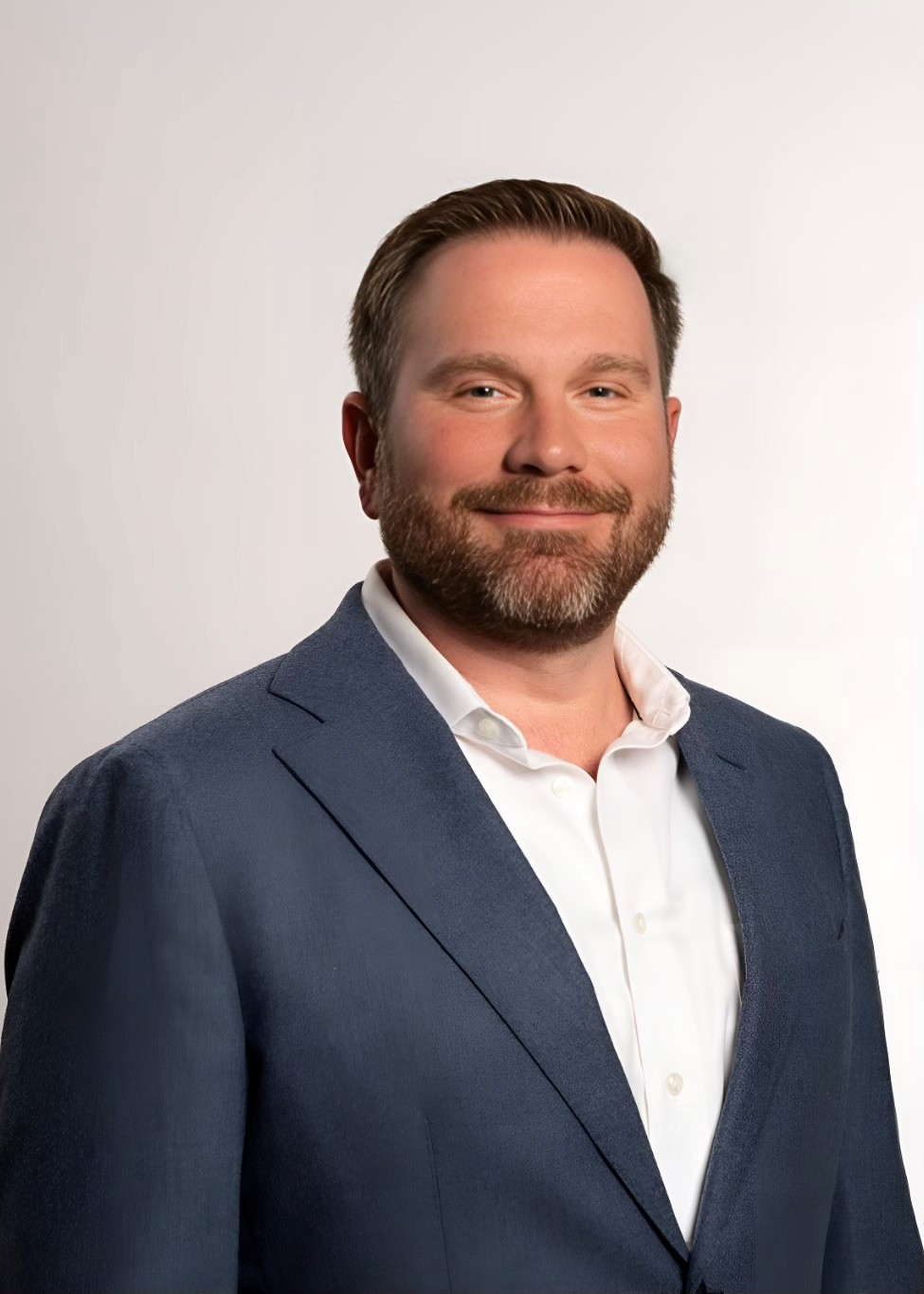
This week, the Dental Amigos welcome Mark Storey, President of the Central Texas Market at Practice Real Estate Group (“PRG”), a commercial real estate brokerage exclusively focused on helping healthcare professionals find and negotiate leases and purchases of office spaces that drive practice success. Mark has been in the real estate industry since 2007 and is known for helping dentists navigate complex real estate decisions. With deep market expertise and a data-driven approach, he has helped hundreds of doctors secure practice locations positioned for long-term success.
In this episode, Mark shares his experience working closely with dentists on site selection and lease strategy. Rob, Paul and Mark discuss how real estate decisions impact practice growth, why aligning lease terms with financing matters, the realities of tenant improvement allowances, and how proper planning today can influence future expansion opportunities as well as eventual practice sales.
To learn more about Mark Storey and PRG, and to access PRG’s Practice Rent and Expense Calculator:
• Website: practicerealestategroup.com
• Practice Rent & Expense Calculator: https://practicerealestategroup.com/medical-real-estate-rent-and-purchase-estimate-calculator/?utm_source=-podcast&utm_medium=referral&utm_campaign=11-2025-dentalamigos
• LinkedIn: www.linkedin.com/company/thepracticecompanies
• Instagram: @thepracticecompanies
Listeners who want to reach Paul can do so at Paul@DentalNachos.com, and those who want to reach Rob can do so at Rob@RMontgomery-law.com.
FULL EPISODE TRANSCRIPT
Bumper
Welcome to the Dental Amigos podcast with Dr Paul Goodman and attorney Rob Montgomery, taking you behind the scenes of the dental business world, all the things you didn't learn in dental school, but wish you had Rob is not a dentist, and Paul is not a lawyer, but since Rob is a lawyer, we need to tell you that this podcast is for informational purposes only and shouldn't be considered legal advice. Listening to this podcast does not and will not create an attorney client relationship, as is always the case. You should formally consult with legal counsel before proceeding with any legal matter. Learn more about the Dental Amigos at www.thedentalamigos.com. And now here are the Dental Amigos.
Rob Montgomery
Hello everyone, and welcome to another episode of the Dental Amigos Podcast. I'm Rob Montgomery, and I'm joined, as always, by the head nacho himself, Dr. Paul Goodman. Great to be talking, Rob. It's good to be talking with you too, Paul. And today we've got an awesome guest, our man in Austin, Texas, a great dental-focused realtor, Mark Storey, and he's going to talk about some things that I think all practice owners and future practice owners need to be aware of, and some things that may not be intuitive to the non-real-estate professional in the dental space. And you know, as I was telling you earlier, Paul, there are some realtors that we deal with around the country that are really outstanding. We'll put them in our real realtor, dental-focused realtor Hall of Fame, and Mark is one of those guys.
So as the president of the Central Texas markets of Practice Real Estate Group, Mark has been in the real estate industry since 2007, and since joining Practice Real Estate Group as one of the original employees, Mark has become known as the beacon of comfort for dentists navigating complex real estate decisions. His deep market experience, expertise, and data-driven approach have helped hundreds of doctors and practice owners secure locations positioned for long-term success. Mark's commitment extends well beyond the transaction. He partners with his clients throughout their journey, from the initial site selection through opening day and beyond, building a reputation for turning what could be transactional relationships into true strategic partnerships.
And I'm really excited to talk to Mark today. And now, without further ado, here's Mark's story. Welcome, amigo, and thanks for being on the show.
Mark Storey
Hey, thank you guys. I really appreciate the opportunity to be here, and I definitely look forward to the conversation.
Paul Goodman
Yeah, that's too much. We start with hard-hitting questions. So if we were in your area of the country, Austin, Texas, where would we go for nachos, and what is your favorite topping?
Mark Storey
Now, I mean, you guys know that's a tough question. Down here in Texas, we got a lot of great spots. You know, I did a scientific deal here, and I asked my colleagues in the office if they had a favorite. And so I'll give you two. I'll give you my personal favorite, which is Lupe Tortilla. In fact, I even had lunch there yesterday. It is a chain, but it's a great place to sit and get some really good Tex-Mex food. And the poll was Lazarus here in Austin, which is another great spot. It's actually a brewery, but they have a restaurant with it as well, and their nachos—
Paul Goodman
—are top-notch. Nice. I appreciate that. What's your favorite topping if we went?
Mark Storey
Well, I mean, you have to have cheese on nachos, right? But you know, I'm a “give me everything” guy. Give me all the fixings—guac, sour cream, cheese, jalapeños. I'll take a little bit of everything on the nachos.
Rob Montgomery
Your kind of guy. Yeah, that is—I like the fact that Mark comes in with the data-driven approach. This is what I'm talking about. This is why this guy's—
Paul Goodman
—driven decisions on nachos and leases.
Rob Montgomery
He's not leaving anything to chance here. Let's talk about the data.
Mark Storey
I just hope I'm not upsetting anybody with my choices here. Obviously, we got a lot down here in Texas, but those are two great spots.
Rob Montgomery
Sounds good. Well, maybe one of these days we'll make it down there and join you. So hey, you know, let's start with that. As we talk about the data-driven location approach, I know that that's something that's important to you and you're passionate about. And obviously, especially in the startup world, where you open matters. So tell our audience what your philosophy is with that—what it is and why it's important.
Mark Storey
Oh sure, yeah. I mean, that is the most important part of the real estate process. Knowing where to go and where the patient base that you're targeting is, is second to none when you're choosing your real estate. So most importantly, you need to have the vision of the practice and the type of patients you want to target. And knowing kind of a demographic breakdown of those patients is super important.
So we like to do site-specific demographics of potential sites. But where we really like to start is what we call a competition circle map. And we take an entire market or submarket, overlay three-mile circles on it, and kind of treat it as a heat map. Where are the holes in the market with the best opportunity—so the least amount of competition with the highest population density? And then just as important are the demographics matching up to the type of patients that you're targeting for your practice.
So whether that be a fee-for-service practice, a PPO practice, or if you're targeting Medicaid, you really need to dive into those demographics to see where those patients are and where they're going. And then, most importantly—or more importantly on that—is the growth in the area. You don't want to be in a stagnant area that already has a lot of competitors in it, and you're just trying to take patients from other doctors. It's better to go to an area that's kind of up-and-coming and growing and going to continue to grow throughout the term of your lease. So you just have more opportunity for those patients there.
But knowing who your competitors are, mapping them out, getting a feel for who they are, looking at their Google reviews—all of those things are just super important for a practice owner when looking at real estate options. Because you want to put yourself in the position to have the most success, and knowing those areas will help you get to that success point.
Rob Montgomery
Yeah, I think that's really important. I think people don't give enough gravity to this. You can spend $500,000 on marketing, and if there aren't patients, or if there are too many dentists, unless everybody's like, “Wow, that practice looks so great. I'm going to leave my dentist, who has been my dentist for 15 or 20 years, and go to that new practice,” I don't think that's how patients make decisions. And you can stack the deck very much with demographics.
Mark Storey
Oh sure, yeah. I mean really, and again, knowing your competitors—that's one of the more important things. You could definitely look at an area that has more competition in it, but if many of the doctors are in their later years and maybe moving towards retirement, maybe they sell their practice, maybe they don't. There's always an attrition rate when they sell a practice. You can target areas where the competition might be a little bit stiffer, but if it's a bunch of retiring doctors in that area, you might have the opportunity to pull those new patients who are moving into the area.
So not only those demographics but also your competitors. And I always suggest to my clients to get online, look at their websites, look at the services they're providing, how many providers are in the practice. What are their Google reviews? What are they doing for marketing right now? Those are all just super important things that they need to pay attention to. It's all data-driven to find that right site that gives you that opportunity for success.
Paul Goodman
It's really key. I have a question mark because they didn't have any classes on this in dental school. When is the right time to connect with the dental-focused real estate realtor? Just for the dentists who are listening while they're driving or working out, or they listen to the Dental Folk—Dental Amigos. What is it like? How are dentists being connected to you? Like, who connects them? When is it in the process? I think that's likely misunderstood or not known at all from our audience. How are the dentists talking—“Hey Mark, my dream is to open up a practice. Let's find a space first.” Do you come through advisors? Both? Tell our audience about that.
Mark Storey
Yeah, absolutely. Well, I always encourage as early as possible. You really want to start thinking about your vision and what you're trying to accomplish with this practice. And talking to your real estate agent about that vision and how you want to accomplish it is very important.
So, you know, I've talked to people two, three years in advance of when they've opened their office. They're getting their ducks in a row, they're putting their business plans together, and all of that. So very important—as early in the process as possible—to talk to your real estate agent.
But for me personally, a lot of our clients come from the dental equipment companies, the bankers, even attorneys, CPAs, and things like that. But in pretty much every major market in the United States, there's usually a medical real estate or commercial real estate firm out there. And I'd encourage all of your listeners to vet their real estate agents. Find one or two or three different companies, go interview the agents, and treat it just like you would a job interview. Put that person's feet to the fire and make sure that they're the right fit for you. That's one of the most important things when you're selecting your real estate agent overall.
But me personally, I love to talk real estate. It's what I do every single day. I love what I do. And I have no problem talking to somebody two, three, five years in advance of when they're planning to do their project, just to start game planning, because it never hurts to gather more data. I'm always big on education. I've always said if I wasn't in real estate, I could be a teacher. So I love educating my clients, not only on the process and the market and the opportunity, but also the demographics, the competition, and just everything that you're going to go through throughout this entire process.
So the earlier the better. And any real estate agent worth itself is going to spend some time developing that vision with you, so they can do the best job for you to find the right property or options that fit that vision that you have for your practice.
Rob Montgomery
Yeah, that's important. And speak to that too, because when we were talking about interviewing realtors, I feel like it's really important to work with somebody that has healthcare—and even more specifically dental—real estate experience. Because these projects for dentists that are building out space are not the normal commercial real estate deals. They're a little quirky in some respects in the commercial real estate world. They have their own sort of things that are important—some of the traps and the things that experience doing these projects is really important.
And I probably see that more obviously than you do in some respects, Mark, because I see the people sometimes who are working with realtors who aren't dental-specific. And I get LOIs from these people. I don't even have to ask—I know. First off, I didn't recognize the realtor's name. Then I look and I see that there are all kinds of issues. There's not enough time for the build-out. It's got bad assignment language. The TI is not right. All the things in there that a dental-focused realtor knows to look for and manage are missing.
But if you can just speak to the importance of that healthcare experience and how you're leveraging that with your clients.
Mark Storey
Absolutely. I mean, for dentists specifically, it is one of the more complicated build-outs that any other user in any market will have. Your requirements for the space—whether it be your power, the water, all utilities overall—are key factors in picking a location and getting your deal done. So the deal structure needs to be tailored towards the dental use there.
Specifically, you have more power requirements than most other users, especially because of equipment and things like that in the practice. So negotiating the right deal and having somebody who's done it before—I cannot stress the importance of choosing a dental-specific advisor. There are plenty of great advisors out there who do medical all day long, but dentistry is a different animal in and of itself, just because of the complications specifically around construction, but also around assignment and subletting, especially when you want to sell your practice in the future.
A lot of other businesses may sell their business and all of that, but it's not quite as complicated and detailed as a dental transition. So there are many things in the letter of intent and specifically the lease that we really need to be aware of to put you in the best position to have the easiest construction process—tenant improvement period, free rent, and all that good stuff. But also what happens when you want to sell your practice and be released from liability.
So if you're working with somebody who does general real estate, yes, they can negotiate a deal for you, but they don't know the ins and outs that are so specific to the dental industry that they're not going to be protecting you in the way that they should. So I can't stress it enough—find somebody who knows dentistry, who knows what it takes to build out a space, who knows what it takes to get the marketing done, and put you in a position to be able to do what you want with your practice. Because it'll pay off in spades at the end of the day. It's already such a complicated process. Then you add dentistry on top of it, and you just really have to have somebody who knows what they're doing and what they're talking about specific to the doctor's needs.
Rob Montgomery
Yeah. Oh, for sure. And I think there's another aspect to that. And before I get to that, this is like the public service announcement—I have to say this. Do not call the name on the sign. And if people have heard me say this 20 times, you will hear me say it 20 more times and 20 more times after that. You don't do yourself a favor by doing that. You just put yourself in a position where you can't get your own real estate advisor because you've made it economically and transactionally impossible for your person to get involved.
You don't save any money. The landlord is paying their broker a commission. Their broker is going to split it with your broker. There's no value to that. Do not fall into the trap that you're going to do your startup, it's a Friday, you're driving around, you left the office early, you drove by the perfect new space at this retail complex, and there's a big sign out there with a realtor's name and phone number. Do not call the name on the sign. That's the end of that public service announcement.
Mark Storey
The landlord and the landlord's agent don't have your best interest at heart. They're representing themselves, and they want to get the best deal for themselves. And that's what your agent is there to do for you. And most importantly—call your agent. That's what you hired them to do. Just snap a picture of the sign, text it to your agent. Any agent who's doing their job is going to get on the phone right away, figure out the details, and set up the conversation the correct way to put you, as the tenant—the dentist—in the best position possible.
Rob Montgomery
Absolutely. But here's the other thing: there are certain things that are specific that need to get in LOIs that we have to consider in these deals. But I think almost as importantly, what a dental-specific, experienced realtor brings to the table is that they're able to sell this use to the landlord. They can demonstrate to this landlord why this dentist—and why the dental profession—is a good tenant, why they should get more favorable terms. Somebody who understands that and is able to advocate for you as a dentist to get better and more stuff from the landlord.
And we will deal with realtors that, you know, some of them are dental-focused. I'd hate to say it, but they are never able to get the stuff that they need to get. And they'll say, “Well, you just can't get that in this market.” It's because you're in this market and you don't know how to get it. You're the problem. So that's value beyond just knowing how to manage the project—it's how to promote your client.
Paul Goodman
Sometimes, Mark, there are two dentists on the podcast, and Rob doesn't know what we're talking about. But maybe I'm going to go back, because maybe it'll bring up something, because you guys already talked dental terms. I joke that dentists say words to patients that they don't understand, like “move your tongue to the mesial.” Nobody knows that, Rob.
Before you go on, you said TI, but let's say TI may not be known. I didn't know until I met you, Rob. What does TI mean? Paul, I'm so flattered. What does TI mean? Because you guys toss that around as insiders, but let's just say someone is thinking of doing a startup or getting a space, and they say they're talking about TI and what that means. Tell us more about that.
Mark Storey
Yeah, absolutely. TI—tenant improvement allowance, often abbreviated TIA—is one of the more important factors in a dental lease, or in any lease for that matter. Basically, it's money the landlord is paying you to put value into their space. It's typically structured based on the base rent. We don't need to get too far into the weeds on that, but that TI allowance is typically a multiple of the base rent that you're targeting.
You know, two times the base rent—if you get anything near that, you're in a good position. That tenant improvement allowance is important because you're taking a space, oftentimes that has never been finished out before. So the landlord gives you a cold, dark shell, as we call it. There's no HVAC, there's no power, there's no plumbing, except maybe the sewer system or something like that. In some cases there are no walls, so you just have this big open space.
Then you're going to go spend $150 to $250 a square foot to finish this out, depending on what market you're in. You're putting a lot of value into that space for the landlord. So that tenant improvement allowance is meant to help you and, from the landlord's perspective, add value to their property by turning your space into a dental clinic.
Often people try to allocate tenant improvement allowance to certain portions of the build-out. When I look at a tenant improvement allowance, I'm looking at what it takes to get this space to a more usable space—HVAC, which is a big-ticket item when you're looking at construction costs; bringing power to the space with the power panel, another big cost; laying your plumbing, which often is one of the most expensive pieces. Especially because you're saw-cutting, laying the plumbing, and then you’ve got to re-pour the concrete on top of it.
So you're adding tremendous value to this landlord's property. What they're doing is offsetting that cost that you're putting into it by basically giving you the base to work with. I kind of look at it as power, utilities, things like that, ADA restrooms—the big-ticket items that any space is going to have to have in it, whether you're a dentist or not.
And you want to get the most tenant improvement allowance you can, but you also have to compare it to the rental rate. You can't just say, “My buddy got $80 a square foot, and I want that too.” Your buddy might be paying $50 a square foot in base rent. If you're paying $20, it's not the same expectation, because that's lost revenue for the landlord as well.
So you really need to look at it on a case-by-case basis. Obviously the goal is to get it as high as possible, but really it's there to add that value to the landlord's space that you're adding personally with your loan or your own funds. The landlord is reimbursing you for that value you're putting into the space.
So it's a very important piece of the deal overall. I wouldn't say it's the most important piece, because you have to take everything as a holistic view. Every deal term plays off the other deal term. It's really about getting to a place where you're in the best position possible—best deal possible—to put yourself in a position of success and have the cheapest build-out with the lowest rent while still having the office that matches your vision.
Whether that be travertine floors or gold faucets and all that type of stuff—that's completely up to you. But it's very important that you have a functional office and something that looks good and is welcoming to patients and keeps them coming back through the door. But that tenant improvement allowance is quite important.
Paul Goodman
I was disappointed to note in the notes that we sent ahead that it's not free money. Because up until today, I did think it was pretty much free money.
Rob Montgomery
A lot of people do. A lot of people do.
Paul Goodman
I've learned something new. I did think this whole time it was kind of free money. So thanks for managing my expectations.
Rob Montgomery
But also, if you could speak to that, Mark—it's not like that ends up kind of getting added into the rent, you know? So it kind of becomes a loan of sorts, right? If you could just speak to that.
Mark Storey
The way I look at it is the landlord is looking at how much money they're going to make over the term of the lease. So if you're signing a 10-year lease, the landlord looks at how much money they're going to make over that 10-year term, and then they backtrack from that number to determine how much they can pay you in tenant improvement allowance while still making a healthy profit on their investment.
Any investor would want to see that. It's very reasonable. I always look at it as kind of two times the base rent. So if we're at $30 a square foot, I want to see close to $60 a square foot in TI and/or other concessions. There are other concessions you can get that offset those costs—whether it be a free base rent period, a build-out period, or whatever the case may be.
If the landlord is not making money off their lease for the first two years of a 10-year lease term—20% of it—you're in a very good position. As an investor, I think anybody would say, “Wait, I'm putting in all this money and I'm not going to make any money back for two years?” They get a little fishy on that.
So again, I shoot for that kind of multiple there, where the landlord is making as little money as possible on their investment but still in a position where they're happy with the deal, and the dentist—my client—is very happy with the deal because they have a solid TI allowance that helps offset the costs of their loan or their own funds for the build-out.
So again, there's no perfect formula, but I kind of shoot for that 24-month period where the landlord is not making any money based on the base rent.
Rob Montgomery
I want to circle back. You know, you were talking about planning before and just consulting and what your vision is. And these are really important things. And obviously, we both do a lot of work with Ideal Practices, and they're really passionate about that message as well.
But I think if we could talk about what that planning looks like. I mean, I think I get it in different ways at different times from people that are considering a startup, and they want to cut corners. Like, “I want to do a startup on the cheap.” What do you think? I think you shouldn't do that, is what I generally say.
But by the same token, you just can't spend money with reckless abandon either. Part of the important thing that a good realtor like yourself, or a good consultant, can bring is helping guide people as to what they really should be building and what they should be spending. Most people shouldn't be doing a 10-op startup, right? And most people probably shouldn't be doing a two-op startup either.
But if you could just speak to why sometimes “cheaper” is not safer, and building offices that are too small in an effort to save money.
Mark Storey
Yeah, that's a great point. I oftentimes get two different types of clients who come to me. One says, “I want to do this as cheaply as possible,” and the other says, “Put me in the place where I'm going to make the most money.” I really don't like those two statements. Now I can work with them and we can talk about it, but again, the vision here is the most important part. What are we trying to create?
This is a marathon. It's not a sprint. I'm sure everybody has heard that many, many times. We're in this for the long run, so we need to plan for at a minimum the initial 10 years of a lease term that the majority of dentists sign. But more importantly, beyond that—what are the future goals? Are you going to open two or three practices, or 10? Or is this going to be your one and your baby, and you lease for the first 10 years and then purchase real estate at the end of that term and build your own clinic—whether that be a ground-up or buying a building that you can retrofit?
Having that vision, in my opinion, is the most important piece. It's not about doing it cheaply. It's not about putting me in the place where I can make the most money. It's about what type of patients you want to target, what type of dentistry you want to practice, and what the 5-, 10-, 15-, or 20-year goal is. Because the real estate needs to be tailored toward that goal.
If your goal is to open multiple locations, multiple practices, then yeah, I would tell you to go on the smaller side and do a five-op practice, maybe six. I don't typically recommend lower than that because, on the transitions market, most doctors want to see a five- or six-op practice at a minimum that they're purchasing. So I don't often recommend going lower than that.
But if you're going back to wanting multiple locations, going a little bit smaller—but still having the number of operatories you want—allows you to get more capital and do additional locations.
On the other side, if you're one and done and this is your baby, and it's where you're going to work for the rest of your career, think about that growth plan. Yes, you're going to start with two operatories fully equipped. But what if the practice just skyrockets and it's doing great, and you've only built out five operatories, and you have the opportunity to have more patients come in, but you just don't have the operatories to serve them?
Now you're between a rock and a hard place because, in a leased space, you can't just expand automatically. If you get lucky, maybe a space opens up next to you and you can expand into that, but that's a rare opportunity.
So if this is going to be your location and where you're sticking it out, you need to plan for, “Hey, what happens if I get super busy? I'm going to need six, seven, maybe eight operatories.” Which, as a startup, can be very daunting and very scary.
That's why I often recommend for my clients who want to do a one-and-done practice that we do something that is efficient and effective and puts you in a position to grow with the market and with the practice. That way you can continue to equip those operatories to five, six, seven—whatever it may be. But also plan for a future move where, in year eight or nine of your lease, your practice is booming and you don't have enough chairs to see people.
At that point, we start looking for some real estate where you can do a ground-up project—maybe even have your own standalone building—and build out a 10-operatory practice if you feel the practice can handle that growth on top of what you already have.
So again, going back to the vision, in my opinion, it's the most important piece of this process. You need to know what you want to accomplish, and that's what I'm here to help with. I want to talk through these things with you, give you my experience of what I've seen many of my clients do in the past, and take that information and build your own vision off of it.
With the real estate, we're accomplishing the overall goal—especially the long-term goals of where you want to go in the future and where you want to grow this thing, whether it be multiple locations or building your own building.
So I really cannot stress the vision enough, because if you're just saying, “Hey, I want to get a practice open,” you're kind of headed down a path where maybe that practice isn't going to go so well.
Rob Montgomery
Yeah. And I think it's important to note too that it's not easy to move or try to change your lease midway through. Sometimes people say to me, “After four or five years we'll just do a shorter-term lease and then we're going to go someplace else.”
Most of these loans for startups are 10-year terms. When I say most, I mean the very vast majority—almost all. And if you're four or five years into a $750,000 or $800,000 loan, which we see more now, you still probably owe about $550,000 on that startup loan.
It may be difficult—even if you only had a five-year lease—to say, “Okay, now I'm going to build out someplace else and take out a $1 million loan.” So now you're telling the bank, “I already owe you $550,000, and now I want to borrow another $1 million to move.” Those economics oftentimes just don't work.
Rob Montgomery
I want to circle back. You know, you were talking about planning before and just consulting and what your vision is. And these are really important things. And obviously, we both do a lot of work with Ideal Practices, and they're really passionate about that message as well.
But I think if we could talk about what that planning looks like. I mean, I think I get it in different ways at different times from people that are considering a startup, and they want to cut corners. Like, “I want to do a startup on the cheap.” What do you think? I think you shouldn't do that, is what I generally say.
But by the same token, you just can't spend money with reckless abandon either. Part of the important thing that a good realtor like yourself, or a good consultant, can bring is helping guide people as to what they really should be building and what they should be spending. Most people shouldn't be doing a 10-op startup, right? And most people probably shouldn't be doing a two-op startup either.
But if you could just speak to why sometimes “cheaper” is not safer, and building offices that are too small in an effort to save money.
Mark Storey
Yeah, that's a great point. I oftentimes get two different types of clients who come to me. One says, “I want to do this as cheaply as possible,” and the other says, “Put me in the place where I'm going to make the most money.” I really don't like those two statements. Now I can work with them and we can talk about it, but again, the vision here is the most important part. What are we trying to create?
This is a marathon. It's not a sprint. I'm sure everybody has heard that many, many times. We're in this for the long run, so we need to plan for at a minimum the initial 10 years of a lease term that the majority of dentists sign. But more importantly, beyond that—what are the future goals? Are you going to open two or three practices, or 10? Or is this going to be your one and your baby, and you lease for the first 10 years and then purchase real estate at the end of that term and build your own clinic—whether that be a ground-up or buying a building that you can retrofit?
Having that vision, in my opinion, is the most important piece. It's not about doing it cheaply. It's not about putting me in the place where I can make the most money. It's about what type of patients you want to target, what type of dentistry you want to practice, and what the 5-, 10-, 15-, or 20-year goal is. Because the real estate needs to be tailored toward that goal.
If your goal is to open multiple locations, multiple practices, then yeah, I would tell you to go on the smaller side and do a five-op practice, maybe six. I don't typically recommend lower than that because, on the transitions market, most doctors want to see a five- or six-op practice at a minimum that they're purchasing. So I don't often recommend going lower than that.
But if you're going back to wanting multiple locations, going a little bit smaller—but still having the number of operatories you want—allows you to get more capital and do additional locations.
On the other side, if you're one and done and this is your baby, and it's where you're going to work for the rest of your career, think about that growth plan. Yes, you're going to start with two operatories fully equipped. But what if the practice just skyrockets and it's doing great, and you've only built out five operatories, and you have the opportunity to have more patients come in, but you just don't have the operatories to serve them?
Now you're between a rock and a hard place because, in a leased space, you can't just expand automatically. If you get lucky, maybe a space opens up next to you and you can expand into that, but that's a rare opportunity.
So if this is going to be your location and where you're sticking it out, you need to plan for, “Hey, what happens if I get super busy? I'm going to need six, seven, maybe eight operatories.” Which, as a startup, can be very daunting and very scary.
That's why I often recommend for my clients who want to do a one-and-done practice that we do something that is efficient and effective and puts you in a position to grow with the market and with the practice. That way you can continue to equip those operatories to five, six, seven—whatever it may be. But also plan for a future move where, in year eight or nine of your lease, your practice is booming and you don't have enough chairs to see people.
At that point, we start looking for some real estate where you can do a ground-up project—maybe even have your own standalone building—and build out a 10-operatory practice if you feel the practice can handle that growth on top of what you already have.
So again, going back to the vision, in my opinion, it's the most important piece of this process. You need to know what you want to accomplish, and that's what I'm here to help with. I want to talk through these things with you, give you my experience of what I've seen many of my clients do in the past, and take that information and build your own vision off of it.
With the real estate, we're accomplishing the overall goal—especially the long-term goals of where you want to go in the future and where you want to grow this thing, whether it be multiple locations or building your own building.
So I really cannot stress the vision enough, because if you're just saying, “Hey, I want to get a practice open,” you're kind of headed down a path where maybe that practice isn't going to go so well.
Rob Montgomery
Yeah. And I think it's important to note too that it's not easy to move or try to change your lease midway through. Sometimes people say to me, “After four or five years we'll just do a shorter-term lease and then we're going to go someplace else.”
Most of these loans for startups are 10-year terms. When I say most, I mean the very vast majority—almost all. And if you're four or five years into a $750,000 or $800,000 loan, which we see more now, you still probably owe about $550,000 on that startup loan.
It may be difficult—even if you only had a five-year lease—to say, “Okay, now I'm going to build out someplace else and take out a $1 million loan.” So now you're telling the bank, “I already owe you $550,000, and now I want to borrow another $1 million to move.” Those economics oftentimes just don't work.
Mark Storey
You're right. You're completely right, Rob. Sticking to that first location for the initial 10 years—especially to match the term of your loan—in my opinion, is very important. Now I have done shorter-term deals, and the plan was to move, but I would say in the majority of those deals they end up renewing for another five years after that.
You’d rather pay off as much of the current loan as possible before you decide to make your next real estate play. Because a ground-up project can easily be $1.5–$2 million, and if you still have a balance on your current loan, you’re just stacking that on top and putting yourself in a tough position. Sometimes it is justified because the practice is doing so well, but I encourage my clients to look at the 10-year term not only because it matches your loan and allows you to pay that down, but also because you can get more concessions out of the landlord with a longer term.
They have more income coming over that 10-year lease period, which allows them to give you more TI or more free rent. Every situation needs to be handled separately, and again it goes back to your vision and your goals. What are you trying to accomplish? Maybe a shorter-term lease is justified in some situations.
A perfect example is if you find a second-generation dental space. You're not taking out a $750k loan to open it up. You might just need some paint, new flooring, and equipment. Your loan is half of what most other doctors may be looking at. In that case, a shorter-term lease can make sense because you’re not putting that much capital into it.
But for the majority of doctors doing a standard dental deal with a 10-year note from one of the banks that lends to dentists, a 10-year lease term is usually a better option. It gives you concessions and the security of knowing where you’re going to be for the next decade. Then around year seven or eight, you start planning your next move—whether you're staying, expanding, or opening another location.
Again, it goes back to talking with your real estate agent as early as possible and starting the game plan. It never hurts to educate yourself and figure out what’s best for your practice.
Rob Montgomery
Yeah, for sure. I always chuckle when people say, “I want to do a shorter-term lease just in case it doesn’t work out.” Well, after you've borrowed $800,000 from the bank on a 10-year loan, it needs to work out.
You don’t really have the ability five years in to say, “This isn’t what I thought it would be. I'm just going to return it.” There’s no return policy on dental practices. The landlord is kind of the least of your worries in that situation—actually, not even kind of. They are the least of your worries if you try to head-fake out of a startup practice halfway through a 10-year loan.
But for our audience, this is where the value of consulting and experienced advisors really comes into play. Because this is not one-size-fits-all.
Mark Storey
No two deals are alike, and it's very important that you talk with your agent, your equipment rep, your banker, and your attorney. Get everybody's opinion. I know there is paralysis by analysis sometimes, but at the same time, getting as much information as possible is never a bad thing.
Rob Montgomery
Exactly. The lender brings their perspective, the lawyer brings another perspective, the realtor brings another. You take all that advice, absorb it, and then make an informed decision about what is a very important business decision in your dental practice ownership journey.
This is all really great stuff, Mark. You clearly have a passion for what you do, and Practice Real Estate Group does great things in Texas and many markets around the country. If people want to learn more about you or Practice Real Estate Group, how can they do that?
Mark Storey
The easiest way is practicerealestategroup.com. All of our contact information is there. We also have a nifty little rent calculator. If you want to get on there and get an idea of what rents cost in your market, you can put in some information and it will give you an estimate of what you might be looking at. But visit our website and that has all of our contact information. We'd love to chat with you.
Rob Montgomery
And obviously LinkedIn, Instagram—we'll include all those links in the show notes. Mark, thanks for taking the time. We appreciate you sharing your knowledge and expertise with our viewers.
Mark Storey
I really enjoyed it, guys. Thank you so much for having me on, and hopefully there was some useful information there.
Paul Goodman
Every time we have an episode like this, I learn something new about leases. I appreciate it. TI—not free money. That was my big takeaway. Thanks so much, Mark.
Rob Montgomery
Thanks.
Mark Storey
Wonderful. Thank you, guys.
Rob Montgomery
Well, the people that are good at what they do are passionate about it, and it shows. Mark is just one of those guys. You hear it in his voice and tone. He loves what he does, he's good at it, and he likes sharing that with people, which makes it fun for us to work with people like that.
Paul Goodman
I always say everything that matters needs a system. And I want to thank you, Rob, because from previous podcasts on this topic you said you do not want your landlord to have a seat at the table when you're selling your practice.
I reframe that when we went out of network with dental insurance. I told our patients, “We do not want your dental insurance to have a seat at the table when making the best decisions about your teeth.” I like that. So whether it's teeth or leases, you need to make good decisions.
Rob Montgomery
That's right. Because—and I have to say in conclusion—without an office, you can't have a dental office.
Paul Goodman
Classic. Thanks, Rob.
Rob Montgomery
All right. Thanks, everybody.
Bumper
Thanks for listening to another great podcast with the Dental Amigos. And don't forget to tune in next time to have the dental business demystified. If you're looking for more information about today's podcast, you can find it on the dental amigos.com if you're looking for Paul, you can find Paul at drpaulgoodman.com and if you're looking for Rob, you can find him at yourdentallawyer.com This podcast has been sponsored by Orange Line Media Group, helping dentists and other professionals create content people love. Find out how we can help you take your business to the next level at www.orangelinemg.com. Till next time.
.png)
.png)

.png)